
The Definitive Wine Glass Guide: Shapes, Sizes, Materials, and How to Choose
The definitive wine glass guide: types of wine glasses, how shape and size change taste, and how to choose crystal stemware that fits how you drink.
26 expert articles, one definitive guideWine glasses differ mainly in bowl size, shape, and rim. Large, wide bowls suit bold reds like Cabernet; smaller, narrower bowls preserve the freshness of whites and rose. For most people, one quality universal glass or a red-and-white pair in thin, hand-blown crystal covers nearly every bottle.
A wine glass is the last instrument a wine passes through before it reaches you, and it is the only one you control. The grower chose the site, the winemaker chose the barrel; the glass decides how much of their work actually arrives. Bowl volume governs how aroma concentrates, rim diameter steers where the wine lands on your palate, and wall thickness changes the temperature and texture of every sip. None of this is mystique. It is geometry and physics, and once you understand it, choosing glasses becomes straightforward.
This guide covers the full territory: the types of wine glasses and what each shape is built to do, how big a bowl should be, why a 1mm rim tastes different from a 3mm one, the stemmed-versus-stemless question, and how to assemble a set without buying twelve shapes you will never use. Along the way it links to our deeper articles on specific varietals, materials, and styles, so you can go as far into any topic as you like.
Our perspective is practical luxury. Luxrify makes hand-blown crystal, so we care about craft, but we have no patience for stemware theater. Most households are best served by two or three well-chosen shapes used constantly, not a cabinet of single-purpose glasses gathering dust. Everything below is written to get you to that small, correct collection.
Wine Glass Fundamentals: Anatomy, Size, and the Rim
Every wine glass is four decisions: bowl, rim, stem, and foot. The bowl is the working part. Its width sets the wine's surface area, which controls how fast aromas volatilize; its taper toward the rim decides how concentrated those aromas are when they reach your nose. A Cabernet poured into a tall, broad bowl smells dramatically more expressive than the same wine in a small tulip, because the larger air space lets volatile compounds collect. Size is not decoration. The standard logic runs roughly 18 to 24 ounces for full-bodied reds, 12 to 16 for whites, with a 5-ounce pour filling each to its widest point.
The rim is where craft shows most. A thin, cut rim, the kind only fine machine work or hand-blowing produces, lets wine flow onto the palate without interruption; a thick rolled rim dumps it in a clumsy rush and adds a lip of glass between you and the wine. This is the single biggest tactile difference between a $10 glass and a fine one, and it is why people who try thin crystal rarely go back. Wall thickness matters too: thin walls take on less ambient heat, keeping whites cool longer.
Wine Glass Shapes Explained: A Visual Guide to Every Style
A visual walkthrough of every major wine glass shape and what each is for.
Read the articleWine Glass Size Guide: How Big Should Your Wine Glass Be?
How big your bowl should actually be, by wine style and pour.
Read the articleWhy Wine Glass Rim Thickness Matters More Than You Think
Why the rim changes texture and taste more than any other feature.
Read the articleWhite Wine Glass vs Red Wine Glass: Does Shape Really Matter?
What genuinely separates red and white glasses, and whether it matters.
Read the articleMatching the Glass to the Wine
Varietal-specific glasses earn their reputation with a handful of real effects. Cabernet Sauvignon and other tannic, full-bodied reds want a tall Bordeaux bowl: the height puts air between wine and nose, softening alcohol vapor, while the generous surface area opens dense fruit and integrates tannin. Pinot Noir wants the opposite proportions, the wide, balloon-shaped Burgundy bowl whose huge surface coaxes out delicate red-fruit and earth aromatics that a narrow glass would suffocate. These two shapes are the poles of red wine service; almost every other red sits comfortably in one or the other.
Whites and rose reward restraint. A smaller bowl keeps a chilled wine cold across the time it takes to drink it and concentrates citrus, stone fruit, and floral notes rather than letting them dissipate. Oaked Chardonnay is the exception that proves the rule, taking a slightly wider bowl to give its richness room. If choosing per-varietal glasses sounds like more cabinet space than you have, our choosing guide below walks the decision tree honestly, including where one shape can serve two masters.
How to Choose the Right Wine Glass for Every Varietal
The master decision tree for matching glass shape to every varietal.
Read the articleBest Wine Glasses for Cabernet Sauvignon
Why the tall Bordeaux shape flatters Cabernet's tannin and dark fruit.
Read the articleBest Wine Glasses for Pinot Noir: Enhance Every Sip
The wide Burgundy bowl explained, and the picks that do it justice.
Read the articleBest Wine Glasses for Chardonnay and White Wines
Glass choices for Chardonnay and whites, from lean to oaked styles.
Read the articleThe Perfect Rosé Wine Glass: Shape, Size, and Style
The right shape, size, and style for rose, settled properly.
Read the articleBurgundy vs Bordeaux Wine Glass 2026: When to Use Each (Sommelier's Guide)
The two great red wine shapes compared, and which to buy first.
Read the articleStemmed, Stemless, or One Universal Glass
The stem exists for two reasons: it keeps your hand's heat off the bowl, and it keeps fingerprints off the glass where you read the wine's color. Those are genuine advantages for anything served cool. But stemless glasses counter with stability, dishwasher friendliness, and a relaxed register that suits weeknights, patios, and anywhere a tipped stem is a real risk. The honest answer is that this is a context decision, not a quality decision; fine crystal exists in both formats, and a serious household often keeps both.
The universal glass is the third path, and the one we recommend to most people starting out. A well-designed universal, a medium bowl around 16 to 19 ounces with a gentle inward taper, handles Cabernet credibly, keeps Sauvignon Blanc focused, and even serves Champagne better than a skinny flute does. It trades the last five percent of varietal-specific performance for owning one excellent shape instead of four adequate ones. Whether your taste runs modern minimalist or traditional cut-crystal formality is a separate, purely aesthetic question, and a legitimate one; a glass you find beautiful gets used.
Stemless vs Stemmed Wine Glasses: Which Should You Choose?
The real trade-offs between stems and stemless, beyond the cliches.
Read the articleThe Best Universal Wine Glass 2026: One Crystal Shape That Handles Every Wine
The case for one shape that handles reds, whites, and rose.
Read the articleModern vs Traditional Drinkware: Finding Your Style
Finding your aesthetic lane between sleek modern and classic formal.
Read the articleBuilding a Collection: Sets, Budgets, and Where Quality Lives
Build a collection backward from how you actually drink. If your table seats six and you host monthly, eight glasses of your primary shape, six plus two against breakage, is the correct first purchase, not a sampler of shapes. The standard progression we recommend: a universal or Bordeaux set first, a white or Burgundy set second, sparkling third. Buy in sets of six or eight rather than fours; matched glasses bought later rarely match, and the per-glass price drops. Count on losing one glass a year to gravity and dishwashers, and buy from makers who sell open stock so a break never strands the set.
On budget: the price of a wine glass buys thinness, clarity, and balance, and the curve flattens fast. Between $10 and $40 per stem the improvement is enormous, the move from thick pressed glass to thin crystal with a cut rim. Beyond that you are paying for hand-blowing, where a craftsman's lung and turn produce seamless bowls and a weightlessness no machine matches, and for design pedigree. Hand-blown crystal at $30 to $60 a stem is, in our view, the value summit: tangibly finer than machine glass, without the fragility anxiety of $100-plus stems you will hesitate to use.
Best Wine Glasses for Beginners: Start Your Collection Right
Which shapes to buy first and how a starter collection should grow.
Read the articleWine Glass Set Buying Guide 2026: How Many Glasses Do You Actually Need?
How many glasses you actually need, by household and hosting habits.
Read the articleAffordable High Quality Wine Glasses: A Sommelier's 2026 Picks
Where value lives under $100, and what to skip.
Read the articleLuxury Stemware: A Sommelier's 2026 Guide to Buying the Best
What top-tier stemware actually buys you, maker by maker.
Read the articleBest Red Wine Glasses 2026: 7 Sommelier-Tested Crystal Picks for Every Budget
Seven sommelier-tested red wine glasses across every budget tier.
Read the articleColor and Iridescence: When Glass Becomes Decor
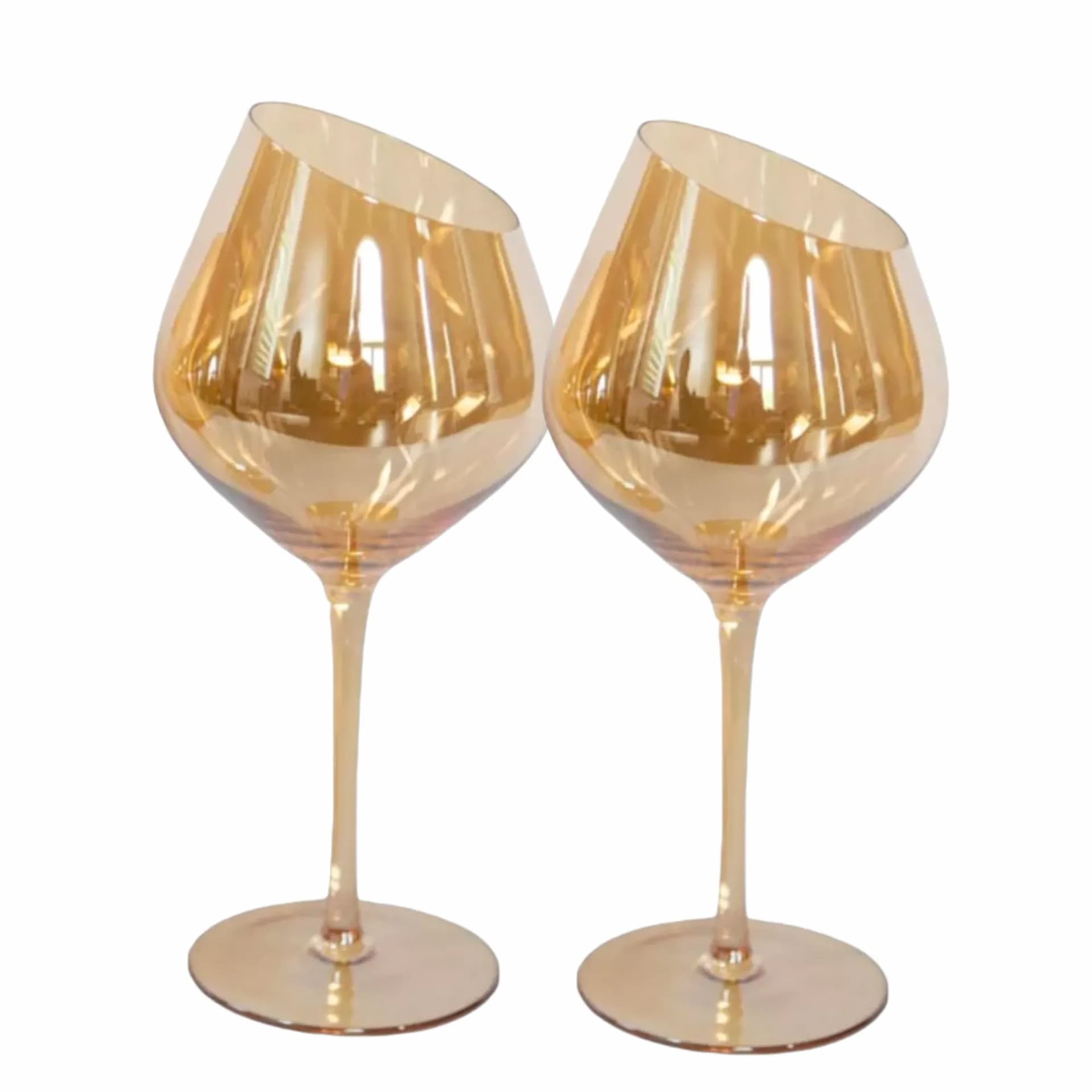
Colored and iridescent glassware is the strongest current in tableware right now, and it deserves a clear-eyed treatment. The traditional objection is real: a sommelier assesses a wine partly by its color and clarity, and amber or smoke-tinted crystal makes that impossible. The traditional objection is also mostly irrelevant at a dinner party, where nobody is grading rim variation and the table is a composition. Colored crystal earns its place the way linens and candlelight do, by setting a mood, and the warm amber and jewel-toned pieces leading the trend photograph and entertain beautifully.
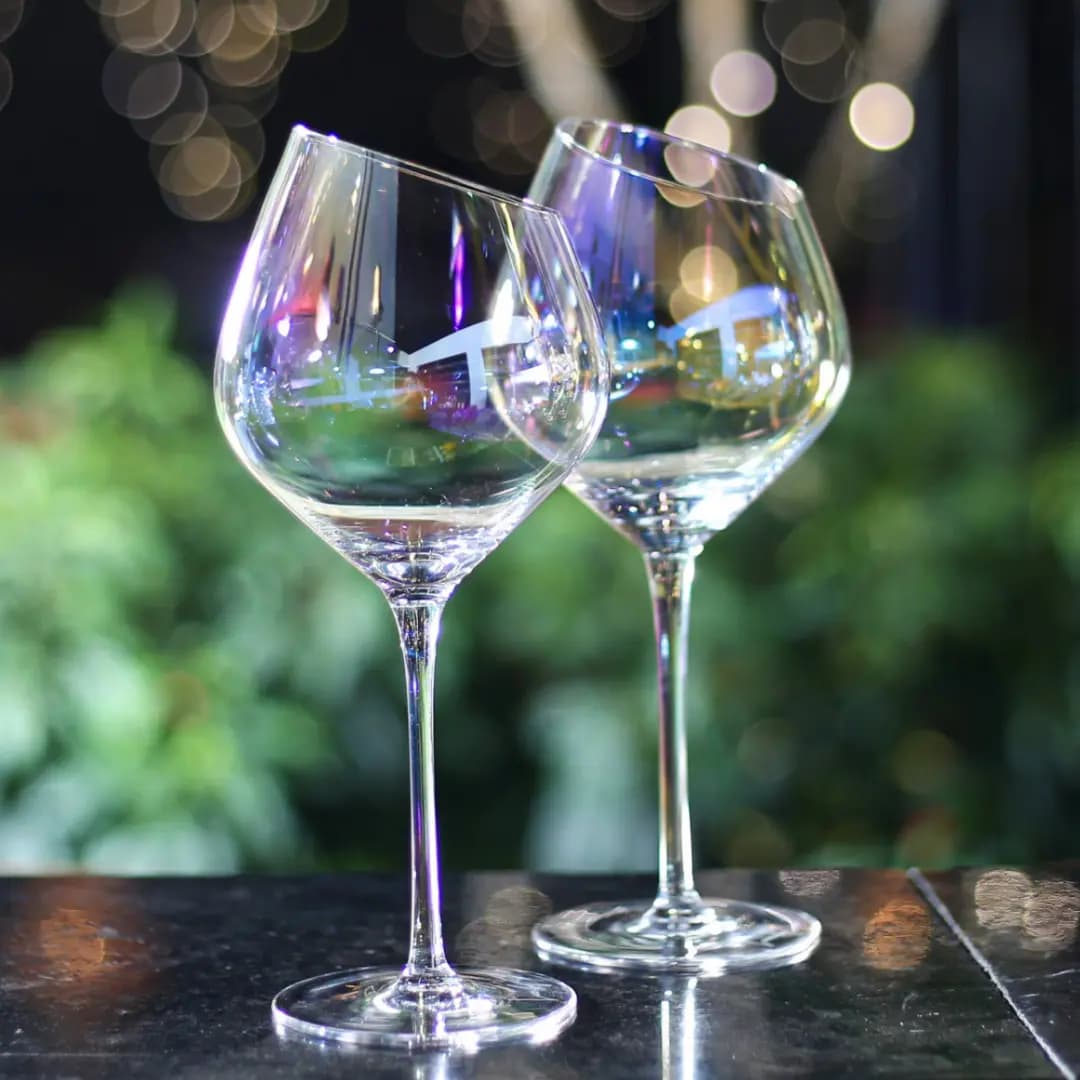
Iridescence is a different mechanism: a metallic vapor or mineral coating fused onto clear crystal that shifts color with the light without actually tinting the wine view much at all. That makes iridescent stemware the practical compromise for people who want the decorative effect while keeping the wine legible. Quality varies widely, the coating on cheap pieces clouds and wears, so buy from makers who fire the finish properly and say so. Our buyer's guide below covers exactly what to inspect. A sensible cabinet keeps clear crystal for serious bottles and a colored or iridescent set for the occasions that are really about the table.
Why Colored Crystal Wine Glasses Are the Hottest Home Trend
Why colored crystal took over tablescapes, and how to use it well.
Read the articleColored vs Clear Wine Glasses: When to Use Each
An honest framework for when color helps and when clarity wins.
Read the articleThe Amber Glassware Trend: Why Everyone Wants It
The warm amber wave in home decor, decoded and styled.
Read the articleIridescent Glassware: Why Iridescent Glasses Are Everywhere in 2026
Why iridescent finishes are everywhere in 2026.
Read the articleIridescent Stemless Wine Glasses: The Real Difference for 2026
What separates good iridescent stemless glasses from novelty ones.
Read the articleIridescent Wine Glasses: A Sommelier's 2026 Buyer's Guide
A buyer's checklist for coating quality, durability, and value.
Read the articleUsing Your Glasses Well: Grip, Comfort, and Daily Service
Technique is the free upgrade. Hold a stemmed glass by the stem, thumb and first two fingers, not because etiquette demands it but because a hand wrapped around the bowl warms a 55-degree red toward 70 within minutes and smears the crystal you paid to see through. Fill to the widest point of the bowl and no further; that maximizes the wine's surface area for aroma while leaving headspace for a proper swirl. Swirl from the wrist with the foot on the table until it feels natural in the air. These habits take an evening to learn and change every glass you drink afterward.
Comfort is part of correct, too. Glass weight, stem length, and bowl diameter all interact with hand size, and a glass that feels precarious never gets used, which is the only real failure a wine glass can have. Smaller hands generally do better with mid-length stems, bowls under about 3.5 inches across, and the lower center of gravity good crystal provides. Match the glass to the hand that will hold it, especially when buying gifts, and the rest of this guide takes care of matching it to the wine.
The Glasses Behind This Guide
Hand-blown by Luxrify artisans. Lead-free crystal. Free US shipping on every order.
Frequently Asked Questions
What are the main types of wine glasses?
The core types are the tall Bordeaux glass for full-bodied reds, the wide Burgundy bowl for Pinot Noir and delicate reds, a smaller white wine glass, a rose or all-purpose tulip, sparkling glasses, and the universal glass, a medium shape designed to serve every style credibly.
Does the shape of a wine glass really change the taste?
Yes, measurably. Bowl width controls how fast aromas release, the taper concentrates them at your nose, and rim thickness changes how wine lands on the palate. The same wine reads noticeably different across shapes, which is why varietal glasses exist and why thin rims matter.
How many wine glasses do I actually need?
Most households need eight of one primary shape, either a universal glass or a Bordeaux-style red. Add a set of white or Burgundy glasses once you know your habits, then sparkling. Buying six to eight of one shape beats owning four each of many shapes.
Are stemless wine glasses bad for wine?
Not bad, just situational. Your hand warms the bowl faster and marks the glass, which matters for chilled whites over a long evening. For casual reds, patios, and crowded tables, stemless is the sturdier, more relaxed choice. Many serious hosts keep both formats.
Is hand-blown crystal worth the price over machine-made glass?
If you drink wine weekly, yes. Hand-blown crystal achieves thinner walls, a finer cut rim, and a lightness machine pressing cannot match, and those directly affect taste and feel. At roughly $30 to $60 per stem you get most of the benefit without precious-object fragility.