There is a particular pleasure that arrives — late, usually, in a wine education — the first time you drink from a piece of genuinely luxury stemware. The bowl seems to weigh nothing in your hand. The rim disappears at your lip. The wine, which a moment ago was perfectly fine, becomes more articulate, more layered, more itself. You set the glass down and find yourself studying it on the table, the way you might study a piece of jewelry.
Luxury stemware is not a marketing category. It is a specific tier of glassmaking — hand-blown, lead-free, finished with rims that approach the physical limits of what crystal can hold — and it represents a meaningful step up from even very good machine-made stemware. This is the field guide to that tier: what defines it, where the value actually lives, and how to invest in pieces worth keeping for life rather than chasing names.
What Is Luxury Stemware? The Criteria at a Glance
Before the deep dive, here is the checklist that separates genuine luxury stemware from everything else.
| Criteria | What to Look For |
|---|---|
| Construction | Confirmed hand-blown -- the bowl shaped by breath, with walls as thin as 1mm |
| Material | Lead-free crystal with barium, zinc, or potassium oxides; rings clearly when tapped |
| Rim | Laser cold-cut and polished, ideally under 2mm, nearly imperceptible at the lip |
| Finishing | Seamless bowl-to-stem and stem-to-foot transitions; flat base, balanced silhouette |
| Capacity | 20+ oz for reds, 22+ for Burgundy, 6-8 for flutes, 8-11 for rocks glasses |
| Price | Roughly 40 to 150 dollars per stem for genuine hand-blown work |
What Actually Makes Stemware "Luxury"
The word "luxury" gets applied loosely in tabletop, so it is worth being specific. Luxury stemware, in the way the trade actually uses the term, sits at the intersection of four properties.
The first is hand-blown construction. A piece is hand-blown when a master glassmaker gathers molten crystal at roughly 2,000°F on the end of a hollow blowpipe and shapes it through a sequence of breaths, rotations, and tool work — usually with one or two assistants, over several minutes per glass. The walls of a hand-blown glass can be as thin as 1mm, and the bowl-to-stem transition is finished by hand rather than mold-pressed. Machine-made glasses, even very good ones, cannot match the wall thinness or the rim refinement of skilled hand-blown work.
The second is lead-free crystalline composition. Modern luxury stemware almost universally uses lead-free crystal — silica with barium, zinc, or potassium oxides added — because it matches the optical brilliance of historical lead crystal without the neurotoxicity. The crystal must contain enough metallic oxide content to refract light brilliantly and ring with a clear, sustained tone when tapped.
The third is rim quality. A laser cold-cut rim is the modern luxury standard. The bowl is shaped, then the lip is cut with a focused laser to a 1mm or thinner edge, and the cut is polished smooth. The result is a rim so fine your lip barely registers it. Rolled or folded rims — the cheaper alternative — leave a small "step" at the lip that experienced drinkers notice on every sip.
The fourth is finishing detail. The points where the bowl meets the stem and the stem meets the foot are visible markers of craftsmanship. On a luxury piece, these transitions are seamless; on a budget piece, they are visibly molded or faintly ridged. The base sits perfectly flat. The stem is straight, balanced, and proportioned to the bowl.
A glass that hits all four marks is luxury stemware in any meaningful sense, regardless of brand. A glass that misses on any one is, by the same definition, something else.
What Distinguishes the Best Luxury Stemware From Merely Premium
The gap between "good" and "luxury" is one tier. The gap between "luxury" and "the best luxury" is another, and worth understanding if you are investing seriously.
At the very top of the market, three additional properties show up. The crystal itself is sourced from specific silica deposits known for purity. Production is overseen by named master glassmakers, often with apprenticeship lineages going back generations. And the finishing — the polishing, the inspection, the packaging — happens at a level of obsessive detail that adds days to the time-per-glass.
For most buyers, the practical luxury tier — hand-blown, lead-free, laser-cut, properly finished — delivers 95% of the experience of the very-top tier at a fraction of the cost. The remaining 5% is genuinely real, but it is also the part most likely to be paying for heritage marketing rather than additional craft. Knowing the difference is the most useful thing this guide can give you.
What to Look For in Luxury Stemware
Use this checklist as the practical equivalent of the four-property definition above.
- Confirmed hand-blown construction. The product description should say "hand-blown" — not "hand-finished" or "hand-decorated," which are weaker claims that can apply to machine-made pieces with hand-applied detailing. Hand-blown means the bowl itself was shaped by breath.
- Lead-free crystalline material. Look for "lead-free crystal," "crystalline," or specific metallic oxide language. Avoid pieces that say only "fine crystal" without specifying lead-free; in some markets the unmodified term still allows lead content.
- Laser cold-cut rim, ideally under 2mm. The rim is the most diagnostic feature of a luxury glass. A run of the fingertip along the lip should feel glass-smooth and almost imperceptible.
- Bowl capacity matched to use. A serious red wine glass should hold 20+ ounces; a Burgundy glass 22+; a Champagne flute 6 to 8; a whiskey rocks glass 8 to 11.
- A clean, balanced silhouette. Set the glass on a flat surface and step back. The stem should be straight, the bowl centered over the foot, the proportions balanced. A wobble or visible asymmetry, no matter how minor, signals craft compromise.
- An audible ringing tone when tapped. Crystal sings; ordinary glass thuds. The sustained ringing of a tap with a fingernail is one of the simplest tests of crystalline content.
- Dishwasher-safe certification, where it matters. This is the rare quality-of-life feature that matters in the luxury tier. A glass that has to be hand-washed every time will, in most homes, sit unused. Top-tier modern luxury stemware is increasingly engineered to survive a careful dishwasher cycle.
- Finished, gift-ready packaging. A glass arriving in a custom-fitted box, with foam pouches and inspection certification, signals a producer treating the piece as the object it is. Loose plastic clamshells are a quiet sign of a brand cutting corners.
A piece that meets all eight is the real thing.
Why hand-blown matters more than any other single factor
The hand-blowing question deserves its own moment because it is the property buyers most often underweight. The reason is mechanical: a hand-blown glass can be made dramatically thinner than a machine-pressed one, and the thinness changes everything else. A bowl with 1.5mm walls weighs less, refracts light more brilliantly, and — most critically — delivers wine to your mouth across an almost invisible rim.
This is the difference that experienced drinkers notice immediately and often cannot un-notice. A 1.5mm rim is essentially weightless on the lip; a 2.5mm rim is a small step the wine has to clear. The wine itself is unchanged, but the experience of receiving it is fundamentally different. We go deeper on this trade-off in our hand-blown vs machine-made wine glasses guide.
Building a Luxury Stemware Collection That Matches Your Drinking
The instinct, when investing in luxury stemware, is to buy a comprehensive set: red glasses, white glasses, Champagne flutes, dessert glasses, brandy snifters. This rarely matches how anyone actually drinks. The smarter approach is to build out by use case, prioritizing the pieces that get the most rotation.
For most households, the priority order looks something like this:
- A universal wine glass set. Six to eight 20-ounce hand-blown crystal glasses cover 80% of household pours — Cabernet, Pinot, Chardonnay, rosé, even a Burgundy in a pinch. This is the foundational investment.
- A pair of Champagne flutes. Even households that rarely drink Champagne benefit from having two beautiful flutes for milestones, anniversaries, and the occasional Sunday mimosa.
- A pair of finer red wine glasses. A second-tier set of two to four genuinely top-shelf reds, kept for serious bottles. These come out for the aged Bordeaux, not the Tuesday Pinot.
- A whiskey or spirits set. A pair of 7-to-10-ounce K9 crystal rocks glasses doubles for whiskey, single-cask bourbon, and any cocktail served on the rocks.
- A decanter. The final addition, and the one that most signals a serious household. A hand-blown crystal decanter aerates seriously young reds and showcases mature ones.
That sequence is the way nine out of ten of our most engaged customers actually build their collections. It prioritizes everyday use over ceremonial completeness, and it lets each addition justify itself before the next one arrives. Our wine glass set buying guide maps this thinking out in more detail.
Caring for Luxury Stemware So It Actually Lasts
A thousand-dollar set of crystal stemware is worth nothing if it lives in a cabinet. The point of luxury is to use it. A few habits that protect the investment without making care a chore:
Wash glasses with lukewarm water and a small amount of unscented dish soap immediately after use. Leaving wine residue overnight invites both staining and mineral deposits. Hand-wash hand-blown pieces by holding the bowl in your dominant hand and the stem in the other, and avoid running water through the bowl with the glass held by the rim — the most common breakage point is the bowl-stem join under wet stress.
For dishwasher-safe luxury stemware, the top rack at low or air-dry heat is the rule. Space glasses so they cannot touch each other during the cycle, and pull the rack out gently — most "dishwasher" damage actually happens at the unloading stage, when a glass shifts and falls.
Store glasses upright on a flat shelf rather than inverted on the rim. The rim is the thinnest and most fragile point, and resting it directly on a shelf invites micro-fractures over months and years. A felted stemware rack or a soft shelf liner is worth the small investment. We have a longer protocol in storing wine glasses and caring for crystal glassware.
Polish before serving with a clean lint-free or microfiber cloth. Even glasses that come out of the dishwasher looking fine often have water spots that read clearly under candlelight. The polish takes thirty seconds and meaningfully changes the visual presentation.
Where Luxury Stemware Earns Its Place
The case for luxury stemware is not that it is necessary. Wine tastes the same in a $4 supermarket glass as in a $400 hand-blown crystal one. The case is that an extraordinary glass changes the experience around the wine — the visual element, the tactile element, the small ritual of pouring and lifting and toasting — in a way that makes drinking feel more deliberate, more present, more like a small ceremony.
For some people, this matters very little. For others, it is the entire point. If the latter describes you, luxury stemware is one of the few household investments that genuinely earns its premium across years of use. A well-made hand-blown crystal glass, cared for properly, lasts decades. The cost-per-pour over that horizon is laughably small.
Frequently Asked Questions
What qualifies as luxury stemware?
Luxury stemware is hand-blown, lead-free crystal stemware with laser-cut rims, balanced proportions, and finishing detail at a level only possible with skilled artisanal production. The price reflects the time and craft required — typically $40 to $150 per stem for genuine hand-blown work. Anything below that price point is unlikely to be hand-blown in any meaningful sense.
Is luxury stemware worth the price?
For serious wine drinkers and committed home entertainers, yes — the difference in rim thinness, bowl balance, and overall sensory experience is real and consistent across tasters. For casual drinkers, high-quality machine-made crystal at a lower price delivers most of the experience. The right answer depends on how often you drink, how seriously you take the wine, and how much the experience around the wine matters to you.
How long should luxury stemware last?
Properly cared for, a hand-blown lead-free crystal glass can last decades. The crystal itself does not degrade with use, and modern formulations are stable indefinitely. The lifespan is determined entirely by handling — most glasses are lost to accidents, not material failure. Our piece on how long crystal glasses last goes deeper on the question.
Can luxury stemware go in the dishwasher?
Modern luxury stemware is increasingly engineered to be dishwasher-safe on the top rack at low or air-dry heat. Older heritage lead crystal, and the very thinnest hand-blown pieces from traditional studios, are usually safer hand-washed. Check the manufacturer's care instructions and, when in doubt, default to gentle hand-washing for irreplaceable pieces.
What is the difference between luxury stemware and fine crystal?
The two terms overlap but are not identical. "Fine crystal" describes the material — high-quality crystal, typically lead or lead-free. "Luxury stemware" describes a finished piece that combines fine crystal with hand-blown construction, expert rim cutting, and refined finishing. All luxury stemware is fine crystal, but not all fine crystal is luxury stemware.
The Luxrify Take
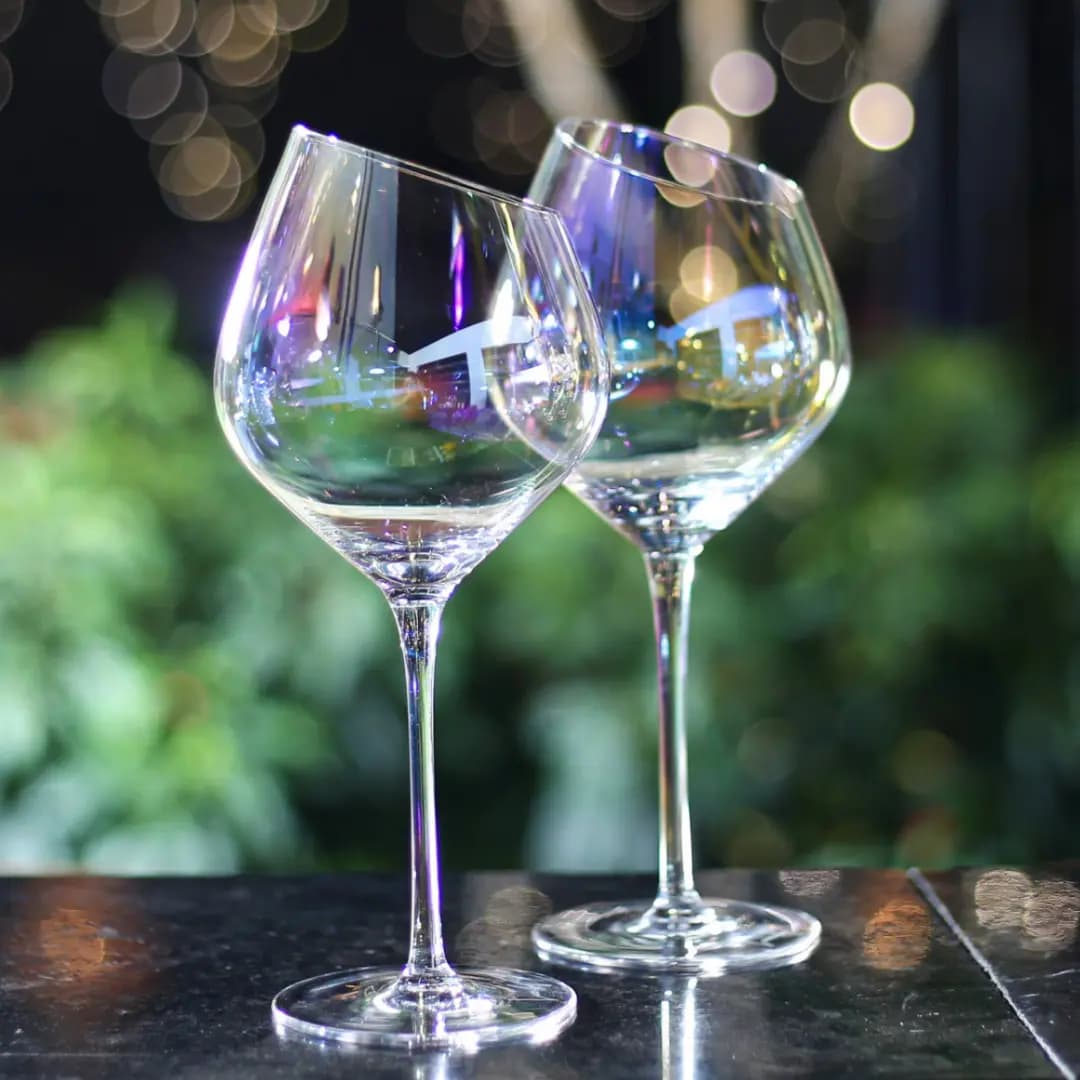
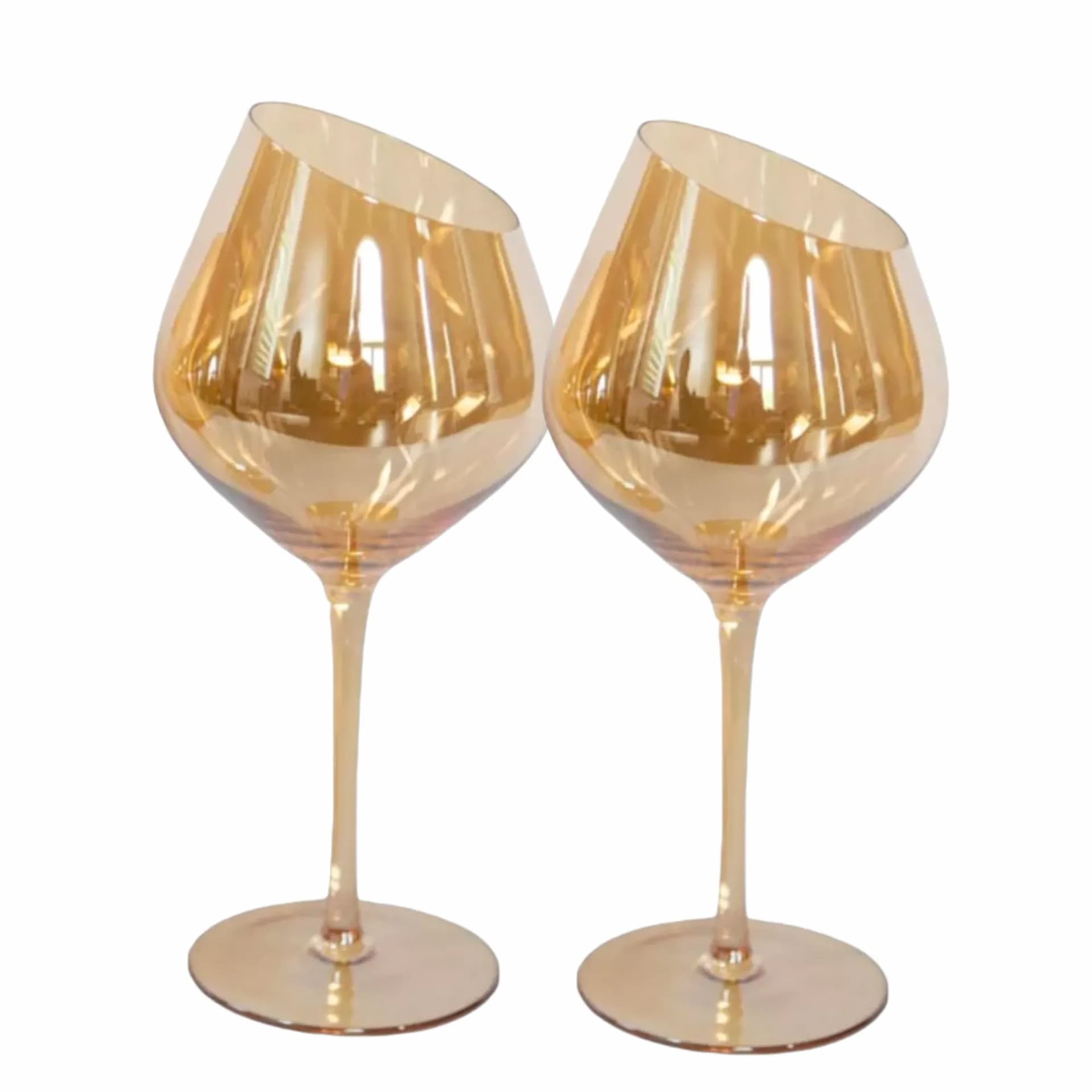
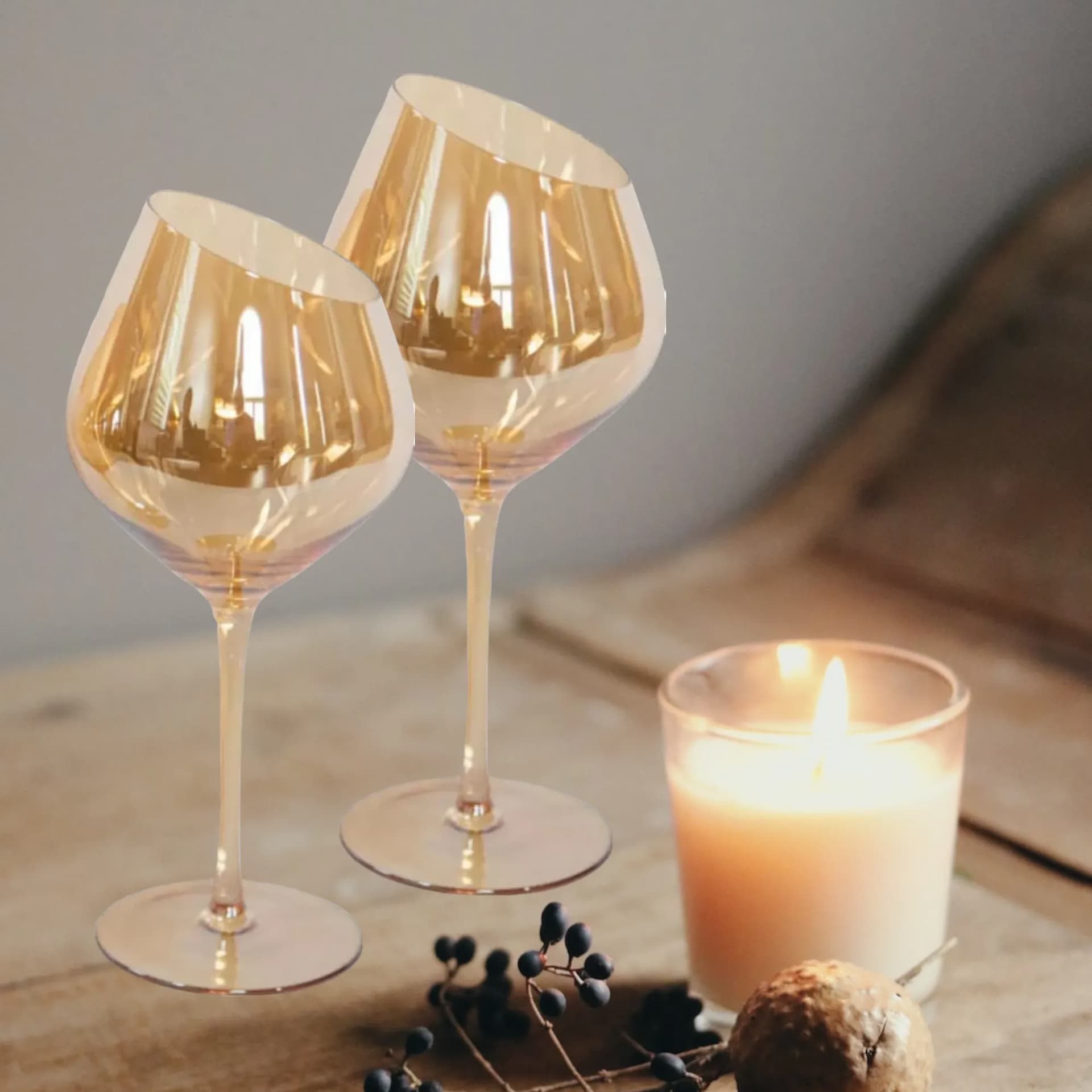
Every piece of Luxrify stemware is hand-blown from lead-free crystal, finished with a laser cold-cut slanted rim under 1mm thick, and color-locked through vacuum ion plating that bonds the iridescent and amber finishes into the surface at a molecular level. The slanted rim was specifically designed to channel aromas toward the nose as you sip — a small but genuinely useful piece of geometry that distinguishes the line. Every glass is dishwasher safe and arrives in gift-ready packaging.
For a foundational household set, the Iridescent Crystal Wine Glasses and the Amber Crystal Wine Glasses are the right place to start. Add the Iridescent Crystal Champagne Flutes when the next milestone calls for them. All three are built to be passed down rather than replaced.