There is a small moment, often invisible, that happens between the host pouring and the guest sipping. The fingers settle on the glass. The wrist rotates a fraction. The wine moves, the nose tilts down to meet it, the glass returns to the table. Done well, the whole gesture takes a second and looks effortless. Done poorly, it warms a Sancerre by four degrees, fingerprints the bowl, and quietly tells the room you are uncertain. How you hold a wine glass is one of the smallest details in a meal, and one of the few that consistently separates confident drinkers from polite ones.
I taught wine service for the better part of a decade — first to servers in fine-dining rooms, later in WSET classrooms — and the question of grip comes up early in every group. People assume there is a complicated rulebook. There is not. There is one principle, three correct grips, and a handful of small habits that make the difference. This piece is the version I wish I had been given on my first night on the floor.
How Do You Hold a Wine Glass Properly?
These are the three correct grips this guide teaches, and when to use each.
| Grip | How to Do It | When to Use It |
|---|---|---|
| Stem pinch | Index finger and thumb pinch the upper third of the stem, just below the bowl | Tastings and swirling — the standard sommelier grip |
| Base pinch | Thumb on top of the foot, index and middle fingers underneath | Formal service and evaluating color — maximum stability, bowl unobstructed |
| Full stem grip | Three or four fingers wrapped loosely around the stem, thumb opposite | Everyday dinners — the relaxed default for most drinkers |
| Stemless hold | Fingers spread along the bottom third of the bowl, thumb on the side | Casual settings with stemless glasses only |
Why How You Hold a Wine Glass Actually Matters
The case for holding a wine glass by the stem is sometimes presented as etiquette, which makes it feel like a rule for its own sake. In fact, the reasoning is entirely practical and worth understanding before any technique.
A glass of wine is served at a specific temperature for a reason — Champagne at 8°C, white wine in the high 40s°F, a delicate red around 60°F, a fuller red closer to 65°F. The grape, the structure, the aromatics are all calibrated for that range. Cup the bowl of the glass in your palm and you become a small, body-temperature radiator pressed directly against the wine. Within minutes, the temperature inside the glass rises above the range the wine was made for, the structure flattens, and the aromas dull. A 60°F Pinot Noir cupped in a warm hand reads, by the third sip, like a 67°F Pinot Noir — softer, less precise, less like itself.
Holding the stem keeps body heat away from the bowl. It also keeps fingerprints off the part of the glass you are about to look at — wine, like good food, is partly a visual experience, and a smudged bowl interrupts the color. And on a thin hand-blown glass, where the bowl is just a millimeter or two of crystal, gripping the bowl invites breakage in a way the sturdier stem does not.
That is the entire case. Hold the stem to protect the temperature, the visual, and the glass itself.
The Three Correct Ways to Hold a Wine Glass
There is no single grip in formal wine service. There are three, and each is appropriate for different glasses and different moments.
- The stem pinch. Index finger and thumb pinch the upper third of the stem, just below the bowl. The remaining three fingers either rest curled against the palm or extend straight along the stem. This is the standard sommelier grip for tasting and the most precise way to control a glass during a swirl.
- The base pinch. Thumb on top of the foot, index and middle fingers underneath, the stem rising between them. This is the favored grip in formal service rooms because it provides maximum stability for a long-stemmed glass and keeps the entire bowl unobstructed by fingers — useful when you are about to evaluate the wine's color against a white tablecloth.
- The full stem grip. Three or four fingers wrapped loosely around the stem, thumb opposite. This is the casual, dinner-party version of the correct grip. It is less formal than the pinch but still keeps body heat away from the wine. Most experienced drinkers default to this one in everyday settings.
All three are correct. The pinch grips are more controlled and look more professional in a tasting context. The full stem grip is the more relaxed and the easiest to default to at a dinner table. None of them are wrong.
What about stemless wine glasses?
The honest answer is that there is no formally correct grip for a stemless glass, because the format is built for casual use. Hold it by the base — fingers spread along the bottom third of the bowl, thumb pressed into the side — and you will keep most of your hand off the warmest part of the wine. Some drinkers cup stemless glasses fully, and on a casual evening this is not a sin; just expect a chilled white to warm faster than it would in a stemmed glass.
If you frequently drink in casual settings and are bothered by warming, stemmed wine glasses are still the more disciplined choice. If you want a cleaner answer for the trade-offs, that companion guide walks through them in detail.
Common Mistakes (and How to Correct Them)
Most grip mistakes are small habits that quietly undermine an otherwise confident table presence. The corrections are equally small.
- Cupping the bowl. The most common mistake. Often a learned habit from holding mugs and tumblers. The fix is to consciously slide your hand down to the stem the moment you pick the glass up, every time, until the new motion replaces the old.
- Holding the rim. Pinching the very top of the bowl with thumb and forefinger. This drags warmth onto the most sensitive surface of the glass and leaves smears exactly where the wine is about to land. Drop the grip down to the stem.
- Pinkie out. A nineteenth-century affectation that has been mocked for two centuries. Fingers should rest naturally — extended along the stem or curled into the palm — but never deliberately splayed.
- Death-grip on the stem. White-knuckled tension communicates discomfort and, on a thin hand-blown glass, can stress the join between bowl and stem. The grip should be relaxed; the glass should feel held, not clamped.
- Tipping too far back. Wine should reach the lower lip first, not the throat. Tilt the bowl just enough to bring the wine to your mouth; let the wine come to you, not the other way around.
- Ignoring the swirl. A confident drinker briefly rotates the glass on the table — counter-clockwise if right-handed, clockwise if left-handed — to release aromas before the first sip. The swirl is the most underrated piece of wine technique.
If your hands tend to be small or short-fingered and a long-stemmed glass feels awkward, our guide on wine glasses for small hands covers stem proportions worth looking for.
How to Hold a Wine Glass at a Tasting
Wine tastings have a slightly more formal grip protocol because every sense is being used to evaluate the wine.
Pick up the glass by the foot or the very bottom of the stem — the base pinch grip — and lift it cleanly to eye level. Tilt the bowl 30 to 45 degrees against a white surface to read the wine's color and density at the rim. Return the glass to the table, place your fingers around the foot, and rotate the base in a smooth circle three or four times to release the aromatics. Lift the glass to your nose without breaking the swirl pattern and inhale through both nose and mouth simultaneously. Sip a small amount, draw air across the wine on your tongue, and let the wine fall to the back of the mouth before swallowing.
That entire sequence — observe, swirl, smell, sip — is what people are watching when a sommelier tastes professionally. None of it is possible if your hand is wrapped around the bowl. The grip is the foundation that makes the technique work. For more on running a tasting at home, our wine tasting at home guide breaks the process down further.
How to Hold a Wine Glass When Toasting
The toast has its own small etiquette. Hold the glass at the upper third of the stem — the standard sommelier grip — and lift it to roughly eye level on the toast. Make brief eye contact with each person you clink with, in cultures where clinking is customary. Touch glasses gently, bowl to bowl rather than rim to rim, because the rim is the thinnest and most fragile part of the glass and a hard tap can crack a thin crystal lip.
For sparkling wine, the same principles apply: hold the flute by the stem to keep fingerprints off the bowl and let the bubbles read clearly through the crystal, and clink at the bowl rather than the rim. There is more on this in our champagne glass etiquette post.
Frequently Asked Questions
Is it rude to hold a wine glass by the bowl?
It is not rude in the sense of being insulting, but it is read by experienced drinkers as a sign of inexperience. The practical issue is that body heat warms the wine and fingerprints obscure the color — both of which work against the experience the wine was designed for. In casual settings the social cost is minor; at a tasting or formal dinner, holding the bowl is a noticeable break from convention.
How do you hold a wine glass when taking a photo?
Hold it by the stem, with the index finger and thumb at the upper third — the standard pinch grip — and angle the glass slightly toward the light source so the bowl picks up reflection. For iridescent or colored crystal, this is especially important; the bowl is the part of the glass that has been finished, and the color reads strongest when fingers are not on the surface.
Should you hold a wine glass by the stem or the foot?
Either is correct. The stem grip — fingers around the upper third of the stem — is the more relaxed, everyday default. The base pinch — thumb on top of the foot, fingers underneath — is the more formal grip used in professional tasting and service. Both keep body heat away from the wine and both are appropriate at a dinner table.
Why do sommeliers hold wine glasses differently?
Sommeliers default to the base pinch because it provides the steadiest grip during a swirl and leaves the entire bowl unobstructed by fingers, which matters when they are evaluating the wine's color against a white tablecloth. The grip is functional, not affected; it is built around the specific tasks of tasting professionally.
Does it matter how I hold a wine glass at home?
Less than at a formal tasting, but the underlying logic still applies. A chilled white wine warms noticeably faster in a cupped bowl than in a stemmed grip, and a fingerprinted bowl muddies the visual experience even at a kitchen counter. Defaulting to a stem grip is one of the smallest habits that makes home drinking feel a degree more deliberate.
The Luxrify Take
A correctly held glass only works if the glass itself was built for the grip. We hand-blow every piece in our wine collection from lead-free crystal, with a balanced stem, a generous 20-ounce bowl, and a laser cold-cut rim under 1mm thick — the kind of weight distribution that lets the glass rest in a stem grip without ever feeling top-heavy. The iridescent and amber finishes are bonded by vacuum ion plating, which means the bowl stays smudge-resistant and dishwasher-safe even after years of regular use.
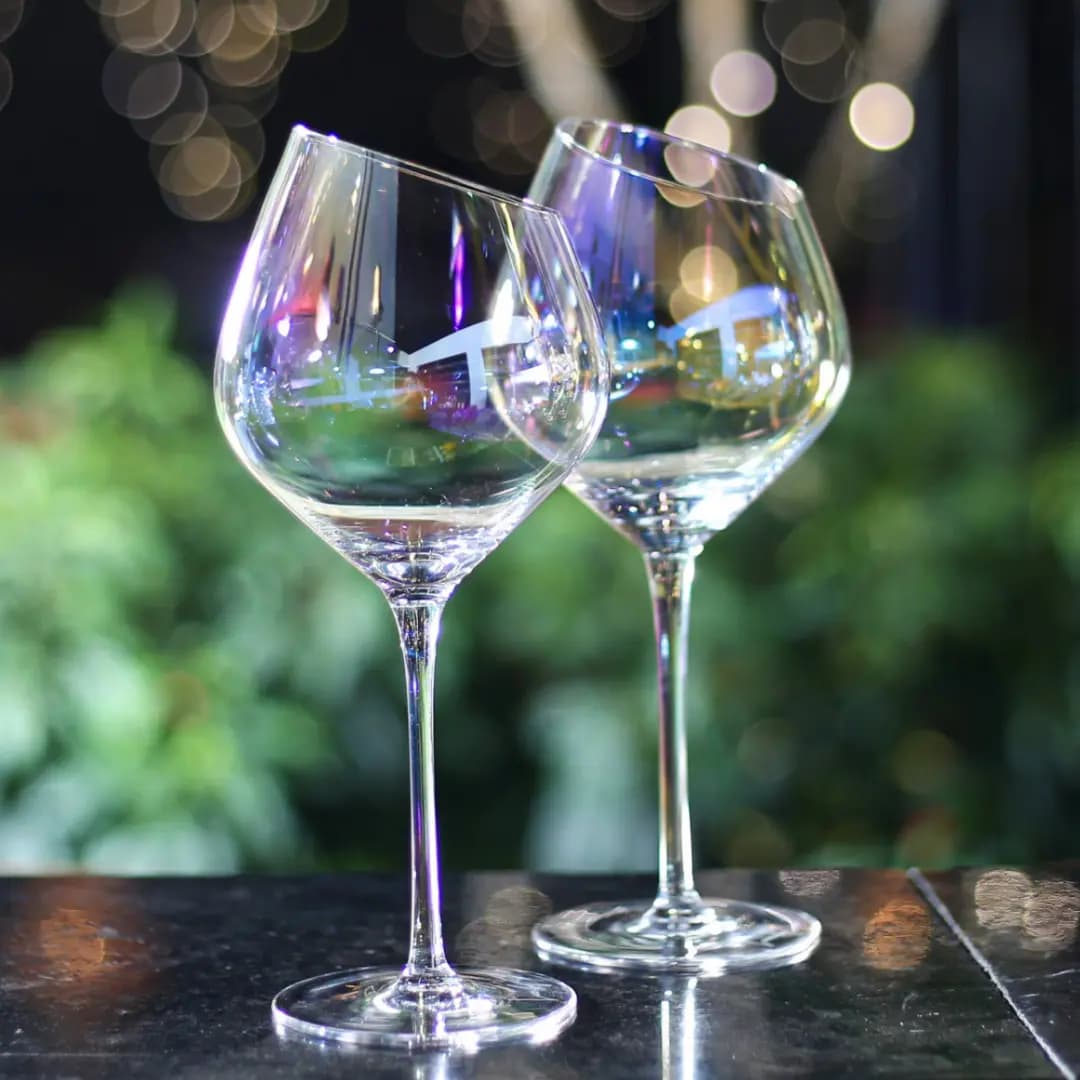
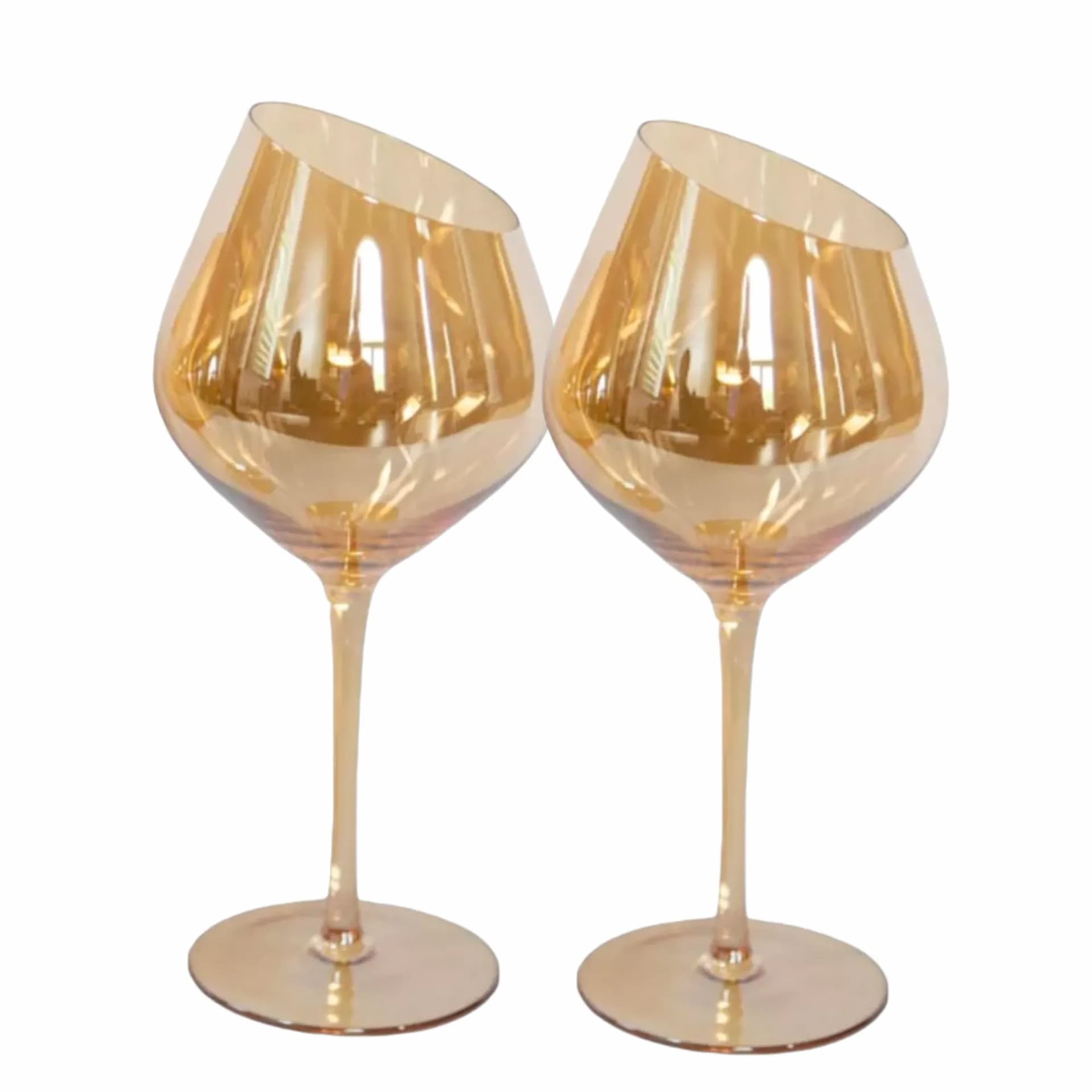
If you are training the habit of holding the stem instead of the bowl, the Iridescent Crystal Wine Glasses and the warmer-toned Amber Crystal Wine Glasses are both built around the geometry that rewards a proper grip — they feel right in the hand from the first pour, and they are built to be passed down rather than replaced.