There is a moment, somewhere in your wine education, when you finally drink from a serious glass — thin walls, a generous bowl, a rim so fine you barely feel it on your lip — and the wine you have been drinking for years suddenly seems louder, more articulate, more alive. The instinctive next thought is: what would it cost to feel this every night? For most of us, the answer historically was "more than I want to spend." That has quietly stopped being true.
The market for affordable high quality wine glasses is genuinely better in 2026 than it has ever been. Production techniques that used to be exclusive to the high-end studios — laser cold-cutting, lead-free crystalline formulations, ion-plated finishes — have moved down the price curve. A serious crystal wine glass that costs $30 today is built more like a $90 glass from a decade ago. The trick is knowing which corners brands cut to hit a price point, and which corners cannot be cut without breaking the experience. This is the field guide.
What Makes an Affordable Wine Glass High Quality?
Here is the entire guide condensed into the specifications that actually matter when shopping the $15-to-$50 bracket.
| Criteria | Recommendation |
|---|---|
| Price per stem | $20–$40 sweet spot ($15–$50 overall range) |
| Material | Lead-free crystal or crystalline, not soda-lime glass |
| Bowl capacity | 18–22 oz; 20 oz is ideal for a universal glass |
| Rim | Laser cold-cut, under 2mm thick — never rolled |
| Wall thickness | Under 3mm (1.5–2mm for hand-blown crystal) |
| Stem-to-bowl join | Clean and seamless, no visible ridge or lump |
| Practicality | Dishwasher safe, stable 3–4 inch base |
What "Affordable" and "High Quality" Should Mean Together
The phrase "affordable high quality wine glasses" gets used loosely. It is worth defining before going further.
By "affordable," I mean a per-glass price that a household can comfortably absorb across a set — call it $15 to $50 per stem. Below $15, manufacturing constraints start to compromise the experience meaningfully. Above $50, you are paying for a level of refinement that genuinely matters for special occasions but is overkill for the weeknight pour.
By "high quality," I mean a glass that does the three things a wine glass exists to do. It must concentrate aromas (so the bowl shape and capacity matter). It must deliver wine to the palate cleanly (so the rim must be thin and laser-cut, not rolled). And it must endure the realities of household use (so the glass must be properly fired, lead-free, and ideally dishwasher safe). A glass that fails any of these three is not high quality, regardless of price.
The sweet spot — and the bracket most readers are actually shopping in — is roughly $20 to $40 per stem. At that price, with the right brand, the gap between affordable and luxury closes more than people expect.
What Drives the Price of a Wine Glass
To buy intelligently in this bracket, you need to understand where the cost in a wine glass actually goes. Five factors account for most of it.
- Material. Lead-free crystal — sometimes called "crystalline" — costs meaningfully more than soda-lime glass. The difference is real: crystal refracts light more brilliantly, weighs less for the same wall thickness, and rings cleanly when struck.
- Production method. Hand-blown glasses cost two to ten times what equivalent machine-made glasses cost, because each one takes minutes of a skilled artisan's time rather than seconds of automated production. The wall thickness and rim quality of hand-blown stemware are also genuinely difficult to match by machine.
- Rim finish. Laser cold-cutting produces a 1mm-thin, seamless edge. Cheaper "rolled" rims are formed by re-melting the lip after the bowl is shaped, which adds a small but tangible step at your mouth.
- Surface treatment. Iridescent or amber finishes applied by vacuum ion plating — where ionized metallic-oxide particles bond into the glass at a molecular level — cost more than sprayed-on coatings, and last incalculably longer.
- Brand premium. Established luxury brands often charge a premium that reflects heritage and marketing rather than additional craft. Emerging brands at the same craft tier can cost 30–50% less without compromising the glass itself.
That last factor is where smart buyers find value. The glass-making craft is global, the techniques are widely understood, and the price-to-quality ratio outside of the most famous Austrian and Italian houses is often dramatically better.
Five Specifications That Separate Real Quality From Costume
Use this checklist when evaluating any affordable wine glass. A piece that passes all five is, definitionally, high quality regardless of brand.
- Lead-free crystal or crystalline construction. Confirm in the listing — soda-lime glass is duller and chips more easily.
- Bowl capacity of at least 18 ounces. Anything smaller does not give a red wine the surface area it needs to open up. Twenty ounces is ideal for a glass meant to handle reds, whites, and rosé.
- A laser-cut rim, ideally under 2mm thick. Run a fingertip along the lip in store, or look for "laser cut" or "cold cut" in the product description online. Rolled rims are an instant disqualifier for serious drinkers.
- Wall thickness under 3mm. Hand-blown crystal is typically 1.5–2mm; quality machine-made crystal is 2.5–3mm. Anything thicker reads as a generic glass tumbler with a stem attached.
- A clean stem-to-bowl join. Inspect the point where the stem meets the bowl. A clean, smooth transition indicates careful production. A visible seam, lump, or ridge is a sign of corner-cutting.
A wine glass that meets these five criteria, at any price, is a glass worth owning.
Where smart buyers compromise — and where they don't
The single most common buyer's mistake at this price point is choosing a glass that looks luxurious — heavy, ornate, dramatic — over a glass that drinks luxurious. The two are different. A thick, weighty crystal goblet looks impressive on the table and feels reassuring in hand, but the experience of drinking from it is muddier than a thin, light, almost weightless glass. The wine seems to have to fight its way out.
The compromise worth making in the affordable bracket is variety: own one excellent universal glass rather than three mediocre shape-specific ones. A good 20-ounce universal handles 90% of household pours — Cabernet, Chardonnay, rosé, even a Burgundy in a pinch. The compromise not worth making is rim quality. A thick rim is a thick rim forever, and no other feature compensates.
For a deeper read on the universal-glass logic, see our best universal wine glass guide.
What an Affordable High Quality Wine Glass Looks Like in Practice
A glass that meets the criteria above, in the $20-to-$40-per-stem bracket, will share a recognizable profile.
It will weigh somewhere between 5 and 7 ounces empty, with a bowl that holds 18 to 22 ounces of wine. It will sit balanced on a flat surface — no rocking. The rim, run under a fingertip, will feel glassy-smooth, almost imperceptible. The stem will rise cleanly from the bowl, with no visible seam. Held to the light, the crystal will refract a faint brightness, and tapped gently with a knuckle will produce a clear ringing tone rather than a dull thud. It will be marked or rated as dishwasher safe.
Visually, the bowl will be tulip-shaped — wider at the middle than at the rim, so the aromas that escape the wine on a swirl are concentrated rather than dispersed. The base will be roughly 3 to 4 inches across — wide enough for stability, narrow enough for elegance. If colored, the finish will be uniform and mirror-bright, without streaks or bubbles in the surface.
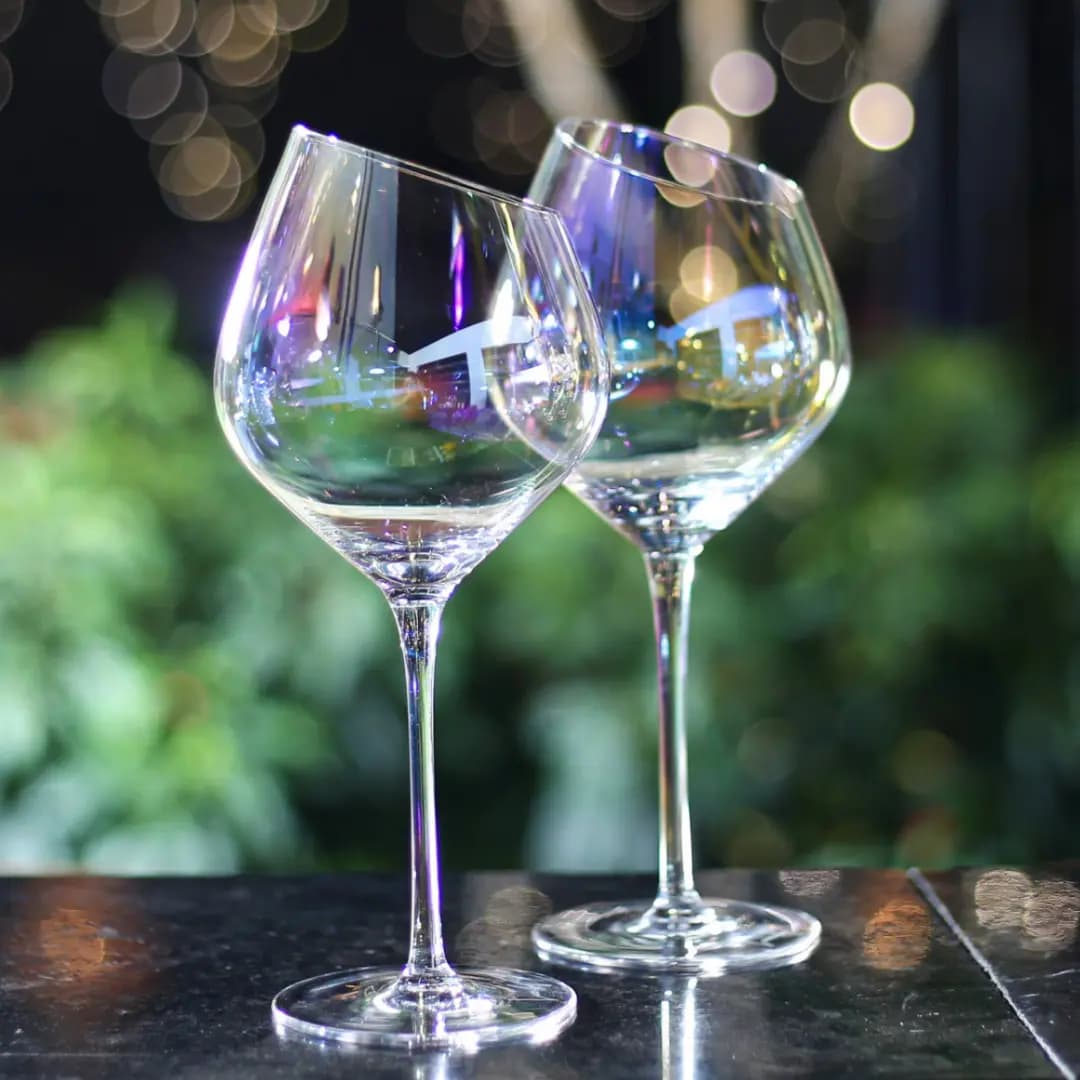
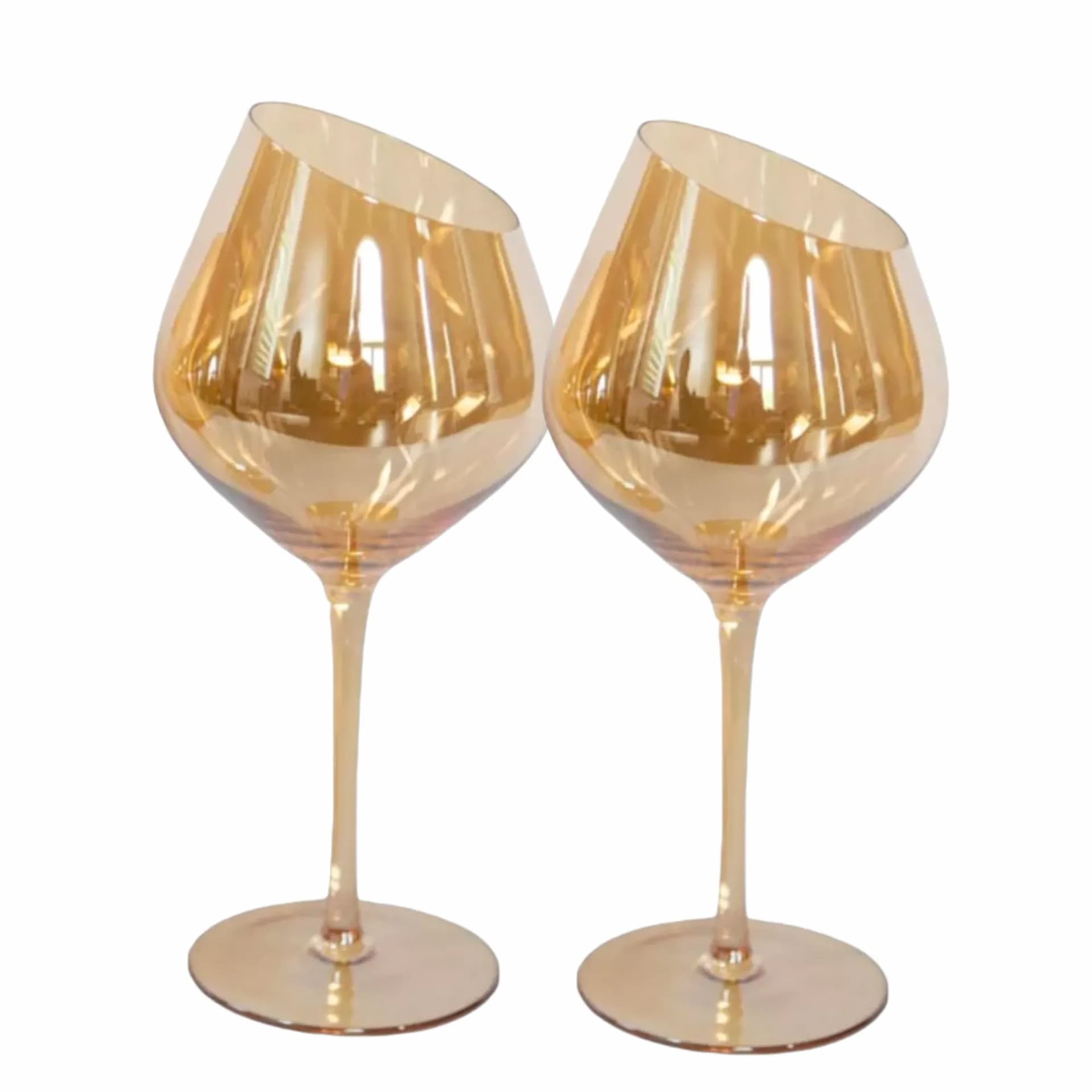
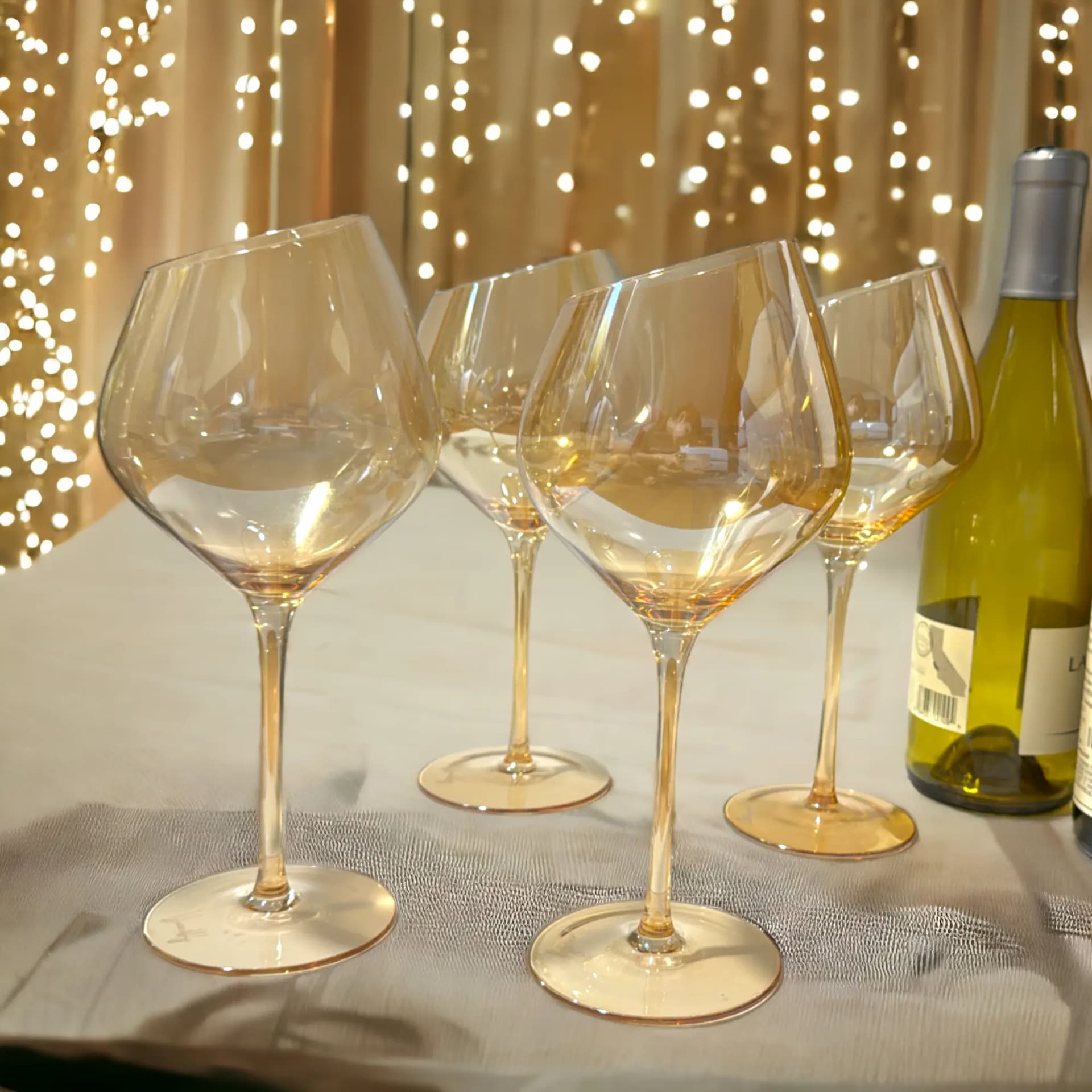
That description matches our own Amber Crystal Wine Glasses and Iridescent Crystal Wine Glasses, which is not a coincidence — when we set out to build the Luxrify line, the goal was specifically to deliver this profile at a price point that felt like real value rather than a luxury tax. Hand-blown, 20.3 fl oz, vacuum ion-plated, laser cold-cut rim, dishwasher safe.
Where to Save and Where to Splurge
Even within the affordable bracket, not every wine glass in the household needs to be the same tier. A two-tier strategy is what most experienced drinkers actually do.
Save on the everyday glasses. A solid set of well-made universal glasses at the lower end of the affordable bracket — $15 to $25 per stem — handles weeknight pours, casual entertaining, and the kind of drinking where a broken glass is annoying but not catastrophic. These are the glasses the dishwasher sees, the ones guests pick up at a kitchen counter party, the ones a child reaches for to refill.
Splurge on a smaller set of better glasses for the occasions that warrant them. A set of two to four hand-blown crystal glasses — at the upper end of the affordable bracket, $30 to $50 per stem — is the right thing to bring out for an aged bottle, an anniversary, a serious dinner with friends. They will not see the dishwasher (or only on a careful cycle), they will live on the front edge of the cabinet, and they will deliver an experience the everyday glasses cannot.
This two-tier approach is also financially smarter than buying twelve identical mid-bracket glasses. It maximizes both the practical and the celebratory functions of stemware. For a deeper read on building a balanced collection, our wine glass set buying guide maps out the thinking.
Common Affordable Wine Glass Mistakes
A few patterns that show up repeatedly when buyers feel disappointed by an affordable purchase.
- Buying for the look, not the rim. A glass with stunning silhouette and a thick rolled lip will frustrate every drinker at the table on every sip. The rim is the contact point. It comes first.
- Choosing a too-small bowl. Sub-15-ounce wine glasses are often labeled "all-purpose" but cannot hold a serious red comfortably. Eighteen to 22 ounces is the right range for a single household glass.
- Falling for "crystal-look" or "crystalline" without checking the material. Some manufacturers use the word "crystal" loosely to describe ordinary glass that has been polished to look brighter. Look for explicit "lead-free crystal" or "crystalline" language.
- Mismatching the glass to the wine you actually drink. If 80% of what you pour is rosé or chilled white, an enormous Burgundy bowl is wasted on you. Pick the shape that fits your real drinking, not the shape the marketing photos pour Cabernet into.
- Underestimating dishwasher safety. A "premium" glass that has to be hand-washed every time will, in most households, sit in the cabinet unused while the everyday set wears out faster than necessary. Dishwasher safety is a real quality-of-life feature.
A wine glass that you actually use every week is more valuable than a wine glass that sits in a cabinet for fear of breaking it.
Frequently Asked Questions
What is a fair price for a high quality wine glass in 2026?
For machine-made crystal at high quality, expect to pay $15 to $30 per glass. For hand-blown crystal at the same quality tier, expect $30 to $60 per glass. Below $15 per glass, manufacturing compromises start to show in rim quality and bowl thickness. Above $60, the additional cost is mostly heritage-brand premium rather than meaningfully better craft.
Are cheap wine glasses bad for wine?
Not bad in any chemical sense — wine is unaffected by the glass's price. But cheap glasses with thick rims, rolled lips, and small bowls genuinely do change the drinking experience: aromas concentrate less, wine flows less cleanly onto the palate, and the visual element is muddied. The wine itself is the same; the experience is not.
Is hand-blown crystal worth the extra cost over machine-made?
For special occasions and serious wines, yes — the difference in rim thinness, bowl balance, and overall sensory experience is real. For everyday drinking, a high-quality machine-made crystal glass delivers 85 to 90% of the experience at a fraction of the cost. Most experienced drinkers own both. Our hand-blown vs machine-made guide goes deeper on this trade-off.
Can affordable wine glasses really compete with luxury brands?
In 2026, yes, in many cases. Production techniques have moved down the price curve, and emerging brands without a heritage-marketing premium can deliver craft tiers very close to the legacy luxury houses at noticeably lower prices. The brand premium is real but has shrunk dramatically over the past decade.
How many wine glasses do I actually need?
For most households, six to eight wine glasses is the right working set — enough to host a dinner of six without running out, enough to absorb the inevitable breakage over a year or two without immediately needing a replacement order. A pair of more elevated glasses for special occasions brings the total to eight to ten. More than twelve is rarely necessary outside of very active hosts.
The Luxrify Take
We built Luxrify around the idea that affordable and high quality should not be a contradiction. Every glass in our wine line is hand-blown from lead-free crystal, finished with a laser cold-cut slanted rim, and color-locked through vacuum ion plating — the same techniques that distinguish $80-and-up luxury brands, at a price meant to be reached for on a Wednesday evening rather than reserved for an anniversary.
A starter pair of Iridescent Crystal Wine Glasses sits well under $100, and the Amber Crystal Wine Glasses at the same tier are the warmer-toned alternative. Both are dishwasher safe, both ship free in the US over $100, and both are built to be passed down rather than replaced.