There is a particular dread that comes with packing a stemware cabinet for a move. The crystal sits there — thin-walled, slim-stemmed, beautiful — and the cardboard box on the floor looks suddenly inadequate to the responsibility. Most of us have, at some point, opened a moving box at the new house and found a glass with a chip on the rim or, worse, a stem snapped clean from a bowl. It is the kind of small disaster that turns an already exhausting day into one with a cleanup, a recycling run, and a quiet recalculation of what the move actually cost.
Wine glasses do not have to break when you move. The professional movers who specialize in art and antiques have a method, and the method is borrowed entirely from the way glassmakers themselves crate their pieces leaving the studio. With the right materials and a deliberate sequence, a household set of crystal stemware — even hand-blown pieces with millimeter-thin rims — can survive a coast-to-coast move with zero loss. This guide walks through the complete protocol the Luxrify editorial team uses when shipping our own pieces, adapted for a residential move.
How to Pack Wine Glasses for Moving
The zero-breakage method condenses to these seven steps, each detailed below.
| Step | What to Do |
|---|---|
| 1. Gather materials | Dish-pack cell boxes, unprinted packing paper, small bubble wrap, towels, heavy-duty tape |
| 2. Inspect each glass | Glasses with hairline cracks will not survive the move |
| 3. Pad the bowl | Stuff one loosely crumpled sheet of paper inside the bowl |
| 4. Wrap diagonally | Roll the glass through 4 to 5 sheets, tucking paper around the stem |
| 5. Add bubble wrap | One layer of 3/16-inch bubble wrap, lightly taped |
| 6. Load stem-up | Place each glass in its own cell, base down |
| 7. Pad, seal, label | Towel layer on top, reinforced tape, FRAGILE on at least three faces |
What You'll Need Before You Start
The single biggest predictor of whether a wine glass survives a move is the materials it travels in. Skip the supply list and even careful packing fails. Get the materials right and the rest is sequence.
- Heavy-duty dish-pack boxes (sometimes called cell boxes or china barrels). These have double-thickness walls and a divider grid sized for stemware. They are the single most important item on this list. A standard moving box is not built to survive being stacked under three other boxes during transit.
- Cardboard cell dividers. If your dish-pack box does not include them, buy them separately. They keep glasses from touching each other — the most common cause of in-transit chips.
- Acid-free white packing paper or unprinted newsprint. Roughly 5 to 8 sheets per glass. Avoid newspaper for crystal; printing ink can transfer onto the bowl and is unpleasant to clean off iridescent or amber finishes.
- Small bubble wrap (3/16-inch). Two square feet per glass. Larger bubble wrap is fine for the outside of the box but does not conform to a stem cleanly.
- Clean kitchen towels or microfiber cloths. Two per dish-pack box, used as a cushioning layer at the top and bottom.
- Heavy-duty packing tape. The cheap stuff splits under load. Use 2-inch reinforced tape rated for at least 50 pounds.
- A permanent marker. For labelling. "FRAGILE — STEMWARE — THIS SIDE UP" on at least three faces of the box, every time.
- Optional: foam pouches. If you are moving particularly thin or hand-blown crystal, a foam stemware pouch slipped over each glass before paper-wrapping is the belt-and-suspenders move.
A typical 8-glass set fits comfortably in one dish-pack box with cells; a 12-glass set may need two. Do not try to economize on box count. A box that is even slightly overfilled becomes a liability the moment it is set down too quickly.
The Step-by-Step Method
Work on a clean, padded surface — a dining table covered with a folded blanket is ideal — and pack one glass at a time, fully, before moving to the next. Rushing is what breaks glasses.
- Inspect each glass. Hold it up to the light. If a glass already has a hairline crack, the move will finish it. Decide before you pack whether it is worth the space.
- Lay out four to five sheets of packing paper. Stack them flat, slightly offset from each other so the corners fan.
- Place the glass on its side at one corner of the paper. Position the bowl just inside the corner, with the stem pointing toward the opposite corner.
- Pad the bowl first. Take a single sheet of paper, crumple it loosely, and stuff it gently into the bowl. The crumple should fill the bowl without forcing it. This internal padding is what prevents bowl collapse if the box is bumped from the side.
- Roll the glass diagonally toward the opposite corner. Keep the rolling tight and even. As you roll, fold in the side flaps of paper toward the stem so the entire glass becomes one tightly wrapped package.
- Tuck the paper around the stem and base. The stem is the most fragile point of contact in transit. It should be entirely hidden inside paper, with no exposed glass anywhere.
- Wrap the whole bundle in a single layer of small bubble wrap. Tape the bubble wrap closed. Do not over-tape — you will want to unwrap easily on the other side.
- Place the glass into a cell of the dish-pack box, stem up. This is counter-intuitive but correct: stem-up loads the heavier base on the bottom of the cell, which is where the box's structural support is greatest, and protects the rim from any settling weight from above.
- Repeat for every glass. Do not start filling around them; fill the cells one by one.
- Pad the top. Once all cells are full, lay a folded kitchen towel or two layers of crumpled paper across the top of the box before sealing. This absorbs any vertical compression from a box stacked on top.
- Seal and label. Two strips of heavy-duty tape across the seam, two more perpendicular for reinforcement. Label "FRAGILE — STEMWARE — THIS SIDE UP" on the top and at least two side faces.
The whole process takes about three to four minutes per glass once you have the rhythm. A 12-glass set is roughly an hour. It is the most worthwhile hour of a move.
Stem-up or stem-down?
This is the question we get most often, and the answer matters. Stem-up is correct. The base of a wine glass is engineered to bear weight; the rim is engineered to be invisibly thin. Loading the box stem-up means any settling pressure transmits through the strong part of the glass, not the fragile part. The opposite orientation — bowl-down — leaves the rim taking weight, and is the most common cause of "I packed them so carefully and they still arrived chipped" stories. Always stem-up.
Special Considerations for Crystal and Hand-Blown Glassware
Lead-free crystal and hand-blown wine glasses behave differently from heavier soda-lime glass and need a small adjustment to the protocol.
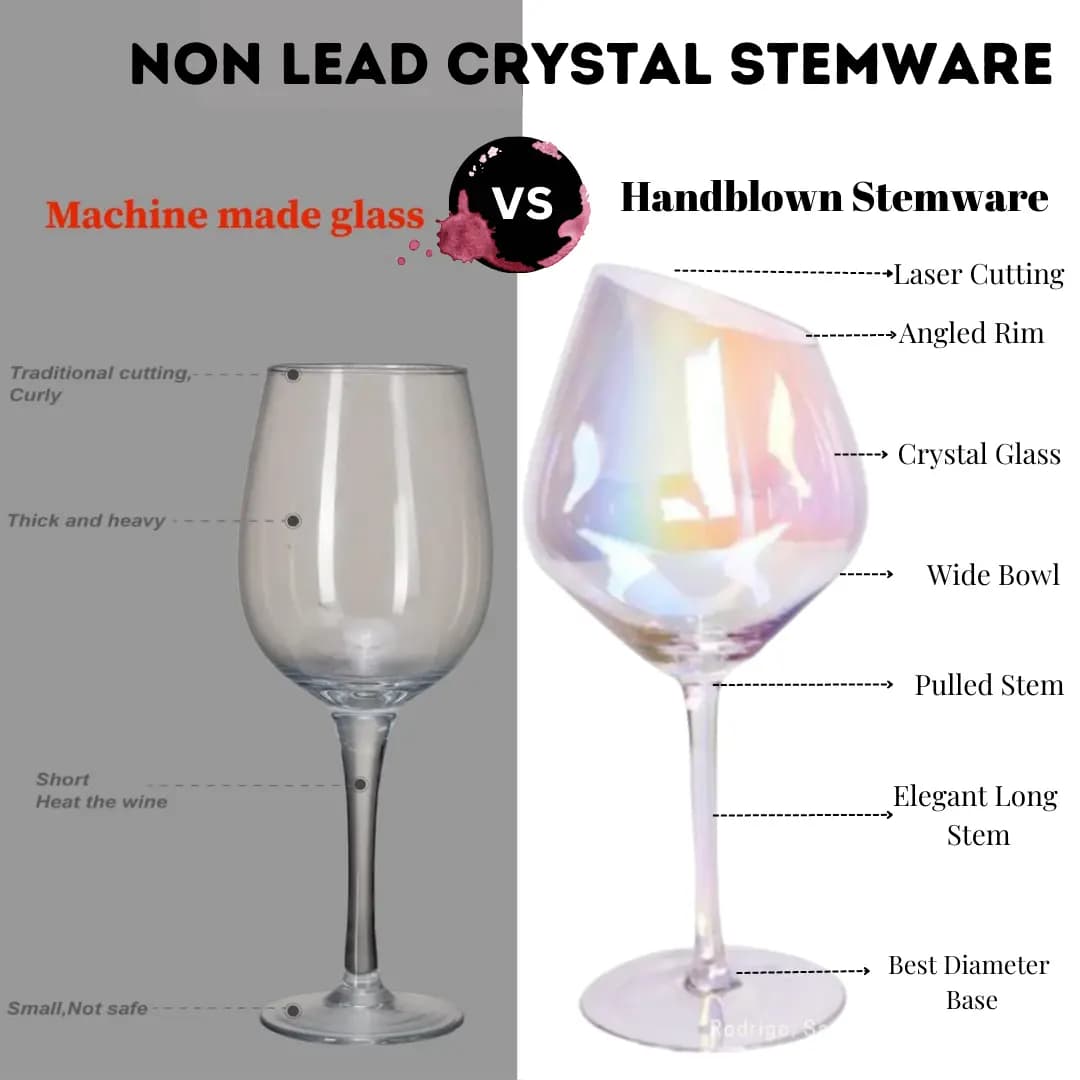
The rims are thinner. On a hand-blown glass the rim can be 1mm or less, which means even a glass-on-glass tap during the move can leave a microchip. Use a foam stemware pouch as the inner layer in addition to packing paper for any glass that cost more than $30, or any glass with a hand-blown construction. The pouch slips on first, the paper wraps around it, the bubble wrap wraps that.
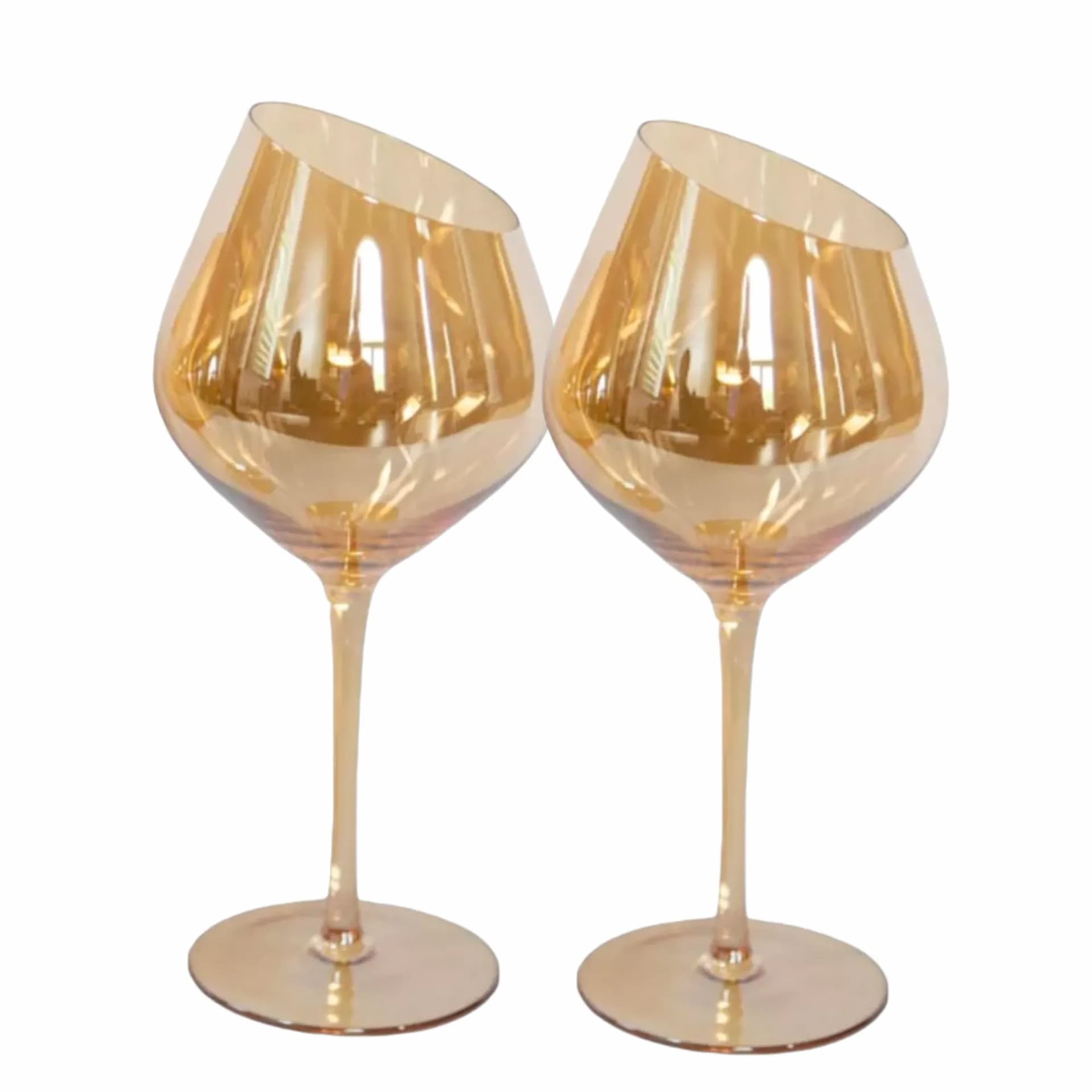
Iridescent and amber finishes — like the colored crystal wine glasses made with vacuum ion plating — do not need any special treatment beyond the standard protocol. The finish is bonded into the glass at a molecular level and will not transfer or scuff during a move. Just keep newsprint away from the bowl, since printing ink can be a chore to clean off.
Decanters and pitchers should never share a box with stemware. The weight differential is too large. Pack decanters separately, with the stopper wrapped in paper and stored alongside the body but not inside it — a snug stopper can shift during transit and stress the neck.
If you are moving long-stored crystal that has been sitting unused, give it a wash and dry before you pack. Moisture trapped against paper for several days in transit can leave a film that takes longer to clean off later than it would have to wash now. Our how to wash crystal glasses guide covers technique.
Where Most People Go Wrong
Five mistakes account for nearly every broken stemware story.
- Underfilled boxes. A wine-glass box must be packed full enough that nothing shifts when you tilt the box. Even one empty cell can let a neighbor migrate during transit.
- Overfilled boxes. The opposite mistake — wrapping each glass so thickly that it stresses the cell walls. The cell should hold the glass snugly but not under compression.
- Newspaper instead of unprinted paper. Ink transfer is real and frustrating to clean off, especially from iridescent or amber finishes.
- Stacking the box wrong in the truck. A "FRAGILE" label is only as good as the people reading it. Tell the movers explicitly which boxes are stemware, and place them on top of the load yourself when possible.
- Unpacking too fast. Many breaks happen on the receiving end — a hurried unwrap, a stem held wrong, a glass set down on an uneven counter. Unpack with the same care you packed with.
For longer-term storage rather than active moving, our storing wine glasses guide covers shelf and cabinet protocols.
Unpacking on the Other Side
The unpacking sequence is shorter but worth doing correctly. Open the box upright, on a padded surface. Remove the top cushioning layer first. Pull glasses out one at a time, stem first, and unwrap on the table — not in mid-air, where a slipped grip ends the journey badly. Inspect each glass under good light before placing it on a shelf; chips or hairlines acquired in transit need to be handled carefully and either retired or used only with care.
Wash each glass with lukewarm water and a small amount of unscented dish soap before its first use in the new home. Even paper-wrapped crystal picks up a slight dust or paper-fiber film during a move that is best removed before pouring wine. Polish with a microfiber cloth and store upright on a stemware rack.
Frequently Asked Questions
What is the best box for packing wine glasses?
A heavy-duty dish-pack or "cell" box, with cardboard divider inserts sized for stemware. These have double-thickness walls and a built-in grid that keeps glasses from touching each other in transit. A standard moving box, even a sturdy one, lacks both the structural strength and the internal compartments needed to survive a real move.
Should you pack wine glasses upright or on their sides?
Pack them upright in their cells with the stem facing up — base on the bottom of the cell. The base is the load-bearing part of the glass; the rim is the most fragile. This orientation transmits any weight from above through the strongest part of the glass and protects the thin rim from compression.
How many sheets of paper should I wrap each glass in?
Roughly five to eight sheets of unprinted packing paper per glass, plus one crumpled sheet stuffed into the bowl as internal padding. Wrap diagonally, tucking the paper carefully around the stem. Add a single layer of small bubble wrap on top for transit.
Can wine glasses be packed with other dishes in the same box?
Only if the dishes are similarly fragile and the dish-pack box has individual cells separating them. Mixing stemware with heavier items like dinner plates is a common cause of breakage — the heavier object always wins a transit collision. Stemware is safer in its own dedicated box.
Are professional movers worth it for crystal stemware?
For valuable hand-blown or antique crystal, yes — a specialty fine-art mover charges more but uses custom crating, climate-controlled trucks, and trained handlers. For everyday crystal, a careful DIY pack with proper dish-pack boxes is reliably zero-breakage. The middle ground — a generalist mover packing your stemware in standard boxes — is where most damage happens.
The Luxrify Take
Every Luxrify glass leaves the studio in essentially the same protocol described above — foam pouch, paper wrap, cell box — because we hand-blow each piece from lead-free crystal and we know the kind of impact it can survive in transit. Whether you are moving across the country or simply rotating glasses between cabinets, the same principles protect them: foam first, paper next, cell box always, stem-up.
If you are starting fresh in a new home and rebuilding a stemware shelf from scratch, the Iridescent Crystal Wine Glasses and the Amber Crystal Wine Glasses both ship in protective gift packaging that doubles as long-term storage — the boxes the glasses arrive in are essentially the boxes you would want to repack them in for the next move. They are dishwasher safe, vacuum ion-plated for fade-resistance, and built to be passed down rather than replaced.