The History of the Champagne Flute at a Glance
Four centuries of champagne glass design, summarized by era.
| Glass | Era | Strengths | Why It Rose or Fell |
|---|---|---|---|
| Coupe | 1663 to mid-1900s | Suited sweet champagne; ideal for towers and spectacle | Goes flat in minutes once champagne turned dry |
| Flute | 1980s to 2010s | Preserves bubbles 20–30 minutes; concentrates aroma at the rim | Small bowl limits aroma development in fine champagne |
| Tulip | Today | Wider bowl develops aromas; tapered rim keeps carbonation | Recommended by houses like Dom Perignon, Krug, and Louis Roederer |
A Glass Shaped by Centuries
Few objects in the world of dining carry as much symbolic weight as the champagne glass. It is the vessel of celebration, the accessory of elegance, the glass that appears at weddings, midnight on New Year's Eve, and every toast worth remembering. But the glass we raise today looks nothing like the one our great-grandparents used, and the story of how it evolved is a fascinating journey through culture, science, and the pursuit of the perfect bubble.
The Early Days: Wine Before Bubbles
Before we can discuss champagne glasses, we need to acknowledge that champagne itself was an accident. The wines of the Champagne region in northeastern France were originally still wines, produced without intentional carbonation. The bubbles that occasionally appeared were considered a fault, not a feature. Winemakers in the 17th century viewed effervescence as a sign of incomplete fermentation and a dangerous tendency to explode bottles.
During this period, champagne was drunk from whatever vessel was available: metal goblets, ceramic cups, and eventually the broad, shallow drinking glasses common in European courts. The idea of a glass specifically designed for sparkling wine did not exist because sparkling wine, as we know it, did not yet exist as an intentional product.
The Coupe: Glamour Over Function
Origins and Legend
The champagne coupe, also called a saucer, is the wide, shallow-bowled glass that most people associate with old Hollywood and Gatsby-era elegance. Its origins are murky and wrapped in legend. The most persistent myth claims the coupe was molded from the breast of Marie Antoinette, a story that is almost certainly false but has proven impossible to kill.
In reality, the coupe was designed in England in 1663, more than a century before Marie Antoinette was born. It was created for sparkling wine at a time when England was arguably more enthusiastic about champagne's bubbles than France was.
The Coupe's Golden Age
The coupe dominated champagne service from the 18th century through the mid-20th century. Its wide, open bowl was perfectly suited to the sweeter champagne styles popular during those centuries. Champagne in the 1800s and early 1900s was significantly sweeter than what we drink today, often containing 100 to 150 grams of sugar per liter compared to the 6 to 12 grams typical of modern brut champagne.
For sweet champagne, the coupe made reasonable sense. The broad surface area allowed the sweetness to dissipate slightly, and the shallow bowl meant you finished the glass quickly before it went flat. The wide rim also made the coupe ideal for champagne towers, the dramatic pyramids of stacked glasses that became a signature spectacle at lavish parties.
Why the Coupe Fell From Favor
As champagne styles shifted toward drier formulations in the 20th century, the coupe's limitations became apparent. The wide surface area that tempered sweetness also caused carbonation to escape rapidly. A coupe goes flat in minutes, taking the wine's effervescence and aromatic complexity with it. The shallow bowl provides no space for aromas to concentrate before reaching the nose.
By the 1970s, serious champagne drinkers were abandoning the coupe in favor of a radically different design.
The Flute: Bubbles Preserved
Design Revolution
The modern champagne flute is a tall, narrow glass with a small bowl and a long stem. Its design principles are the opposite of the coupe in almost every way. Where the coupe maximizes surface area, the flute minimizes it. Where the coupe lets aromas scatter, the flute concentrates them.
The flute's narrow profile dramatically reduces the wine's exposure to air, preserving carbonation far longer than the coupe. A glass of champagne in a flute maintains its effervescence for 20 to 30 minutes or more, compared to just a few minutes in a coupe.
The Science of Bubbles
The flute's design takes advantage of several physical principles. Carbon dioxide escapes from sparkling wine at nucleation points, tiny imperfections on the glass surface where gas molecules can gather and form bubbles. In a narrow glass, the bubbles rise through a concentrated column, creating the visually mesmerizing stream of beads that champagne lovers admire.
Many quality flutes feature a small etched point at the bottom of the bowl, an intentional nucleation site that produces a single, elegant stream of bubbles rising through the center of the glass. This is both aesthetically pleasing and functional, as the rising bubbles create gentle circulation that continually refreshes the wine's surface.
The tall, narrow shape also means that aromas concentrate in the small opening at the top of the glass. When you bring a flute to your nose, you encounter a focused burst of the wine's bouquet: brioche, citrus, toast, and stone fruit, depending on the champagne.
The Flute's Dominance
From the 1980s through the 2010s, the flute was the undisputed standard for champagne service worldwide. Restaurants, bars, hotels, and homes universally adopted it. The flute became so synonymous with champagne that the two became inseparable in popular culture.
The Tulip: A Modern Compromise
Challenging the Flute
In recent years, a growing number of sommeliers, champagne producers, and wine critics have begun questioning whether the flute, for all its bubble-preserving virtues, might be too restrictive. The concern centers on aroma.
While the flute concentrates aromas at its narrow opening, the small bowl does not give the wine enough room to develop those aromas in the first place. Complex, aged champagnes in particular are shortchanged by the flute. Their nuanced flavors of hazelnut, honey, dried fruit, and mineral complexity need space to unfurl, much like a still wine benefits from a wider bowl.
The Tulip Shape
The solution gaining widespread adoption is the tulip glass, a design that splits the difference between flute and coupe. The tulip has a wider bowl than a flute, allowing the wine room to breathe and develop aromatic complexity. But it tapers to a narrower rim, concentrating those aromas and maintaining carbonation far better than a coupe.
The result is a glass that preserves the visual drama of rising bubbles, allows the full aromatic spectrum of fine champagne to express itself, and directs those aromas to the nose in a concentrated, satisfying way.
Many top champagne houses, including Dom Perignon, Krug, and Louis Roederer, now recommend tulip-shaped glasses for their prestige cuvees. The message is clear: great champagne deserves a glass that treats it like the complex wine it is, not just a delivery vehicle for bubbles.
Luxrify's Approach
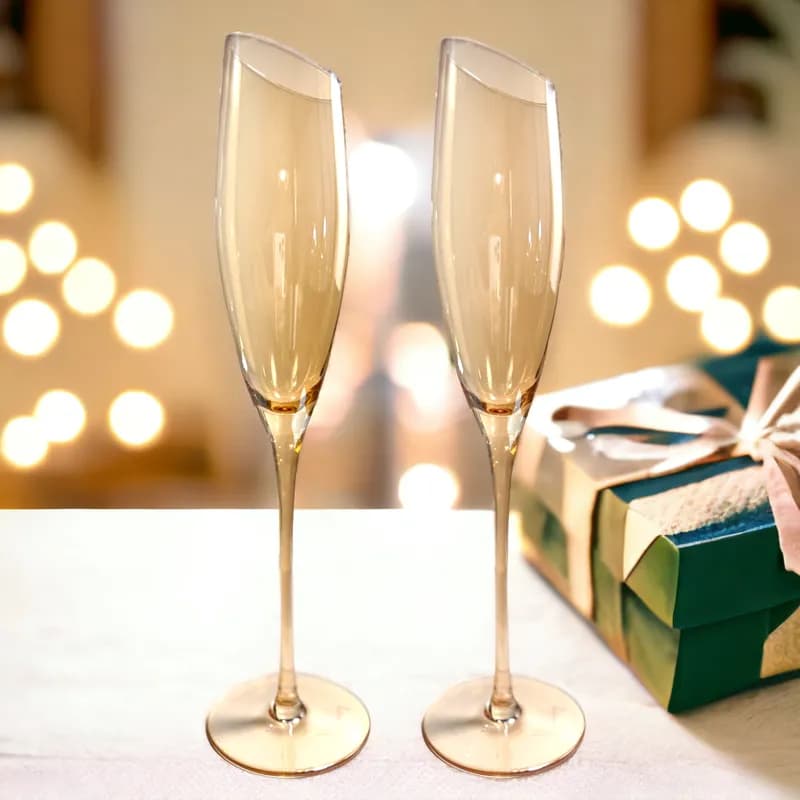
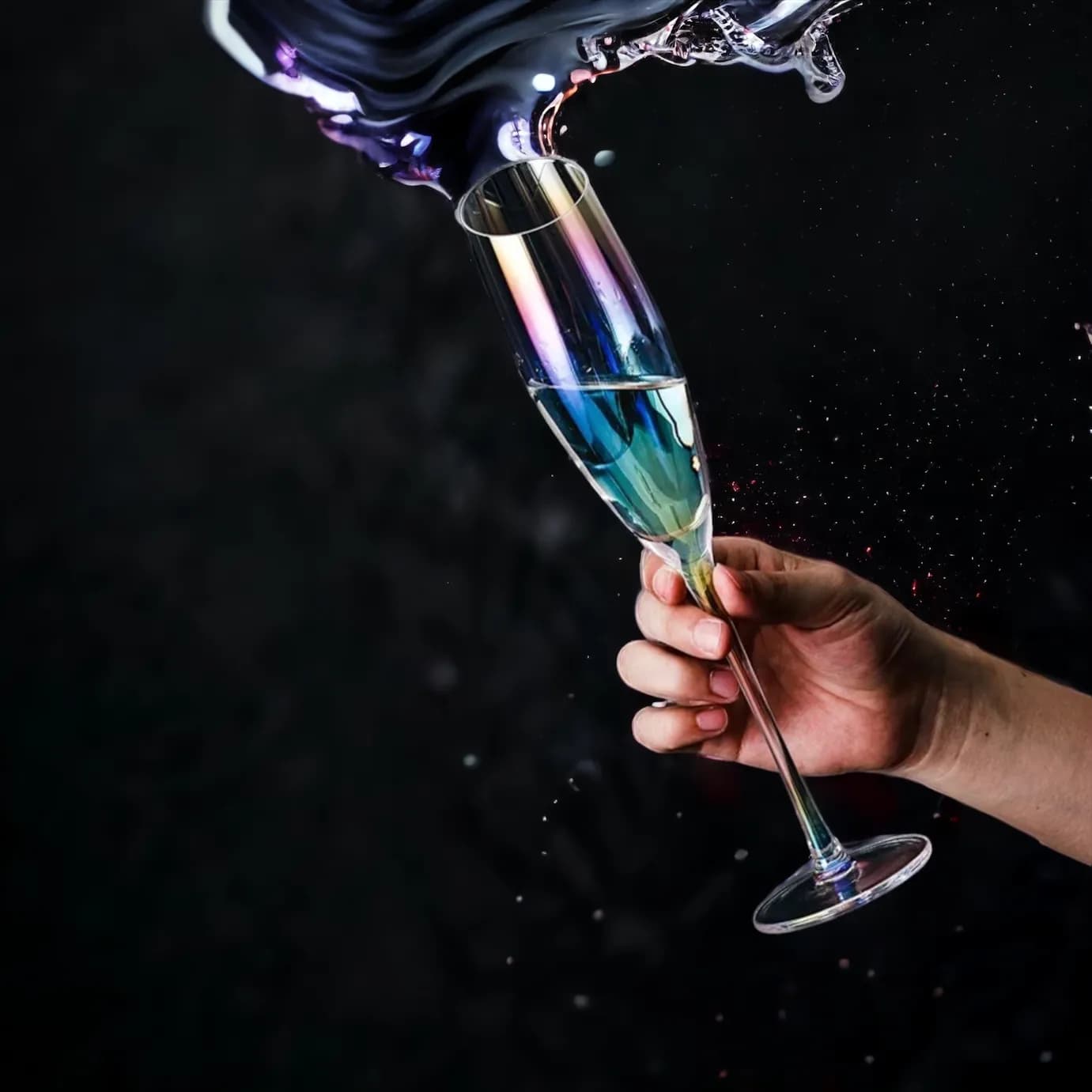
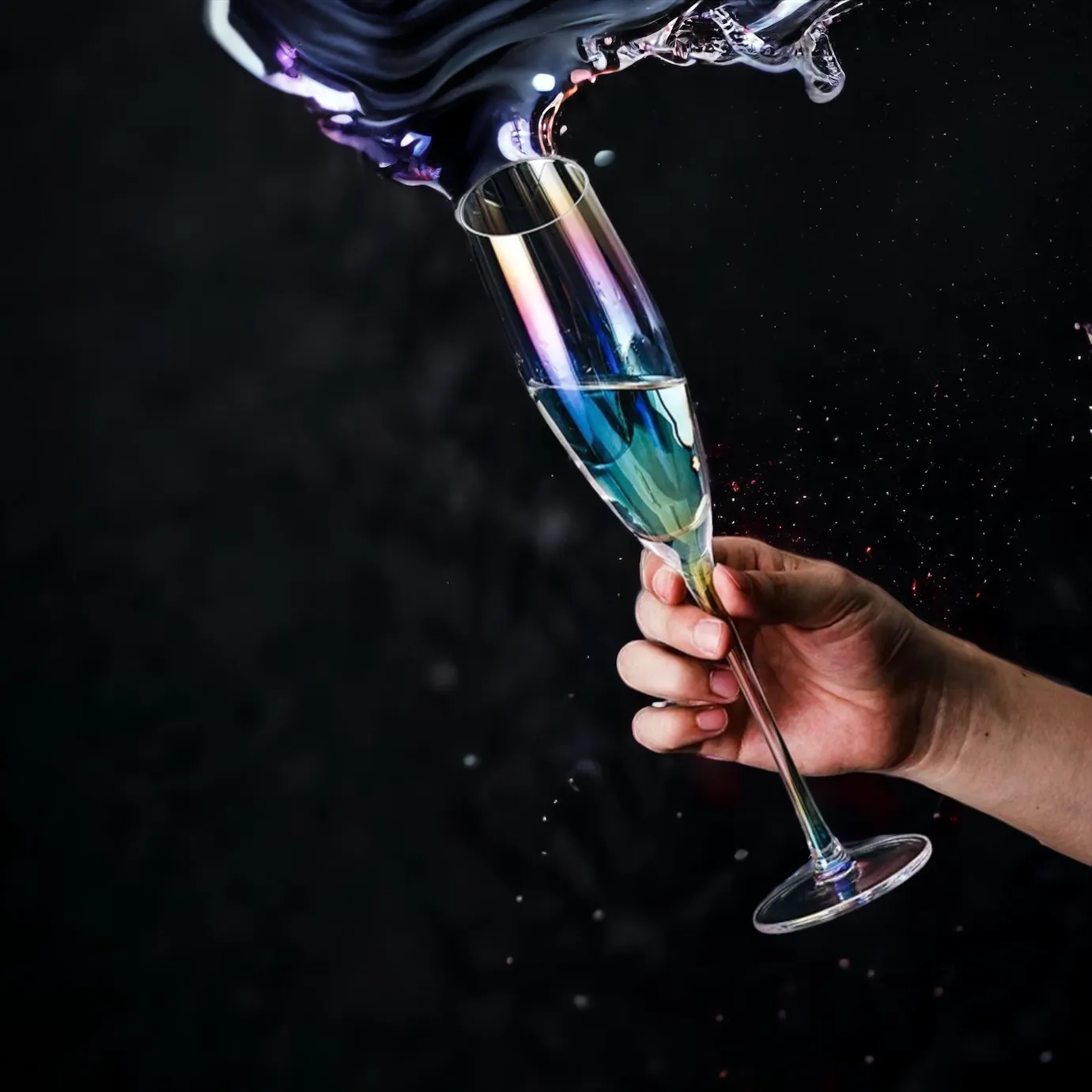
Luxrify's champagne glasses embrace this modern philosophy. Designed with a tulip-inspired profile, they balance effervescence preservation with aromatic development. The lead-free crystal construction ensures a thin rim for seamless sipping, while the iridescent and amber finishes add a contemporary visual element that honors champagne's spirit of celebration.
Regional Variations
The Champagne Region
In Champagne itself, many vignerons have adopted a glass called the "oenologue," essentially a smaller version of a white wine glass. This reflects the growing view among producers that champagne should be appreciated with the same analytical attention given to fine Burgundy or Bordeaux.
Japan
Japanese champagne culture has embraced ultra-thin, handcrafted crystal glasses that prioritize tactile refinement. The rim thickness on some Japanese-made champagne glasses is less than half a millimeter, creating an almost imperceptible transition between glass and wine.
The United States
American champagne culture tends to be more celebratory than analytical, and the flute remains the most popular choice in restaurants and homes. However, high-end wine bars and restaurants in major cities have increasingly adopted tulip-shaped glasses.
The Coupe's Comeback
In an ironic twist, the coupe has experienced a revival in recent years, driven not by wine science but by cocktail culture and aesthetic nostalgia. The coupe has become the preferred vessel for cocktails like the classic daiquiri, sidecar, and aviation. Its wide bowl and elegant profile make it a natural fit for stirred and shaken drinks where carbonation is not a factor.
As a champagne glass, the coupe has also reappeared at events where visual spectacle matters more than wine preservation: champagne towers at weddings, themed parties, and photo opportunities. There is no denying its photogenic appeal.
However, for actually drinking champagne and tasting it with attention, the coupe remains the least functional option.
What the Future Holds
Glass design continues to evolve as our understanding of wine science deepens and consumer preferences shift. Some producers are experimenting with asymmetric bowl shapes that create different aromatic experiences depending on how you tilt the glass. Others are exploring textured interior surfaces that increase nucleation points and produce more vigorous bubble streams.
What remains constant is the underlying principle: the best champagne glass is one that preserves the wine's carbonation, develops its aromatic complexity, and delivers it to the drinker with minimal interference. Whether that glass is called a flute, a tulip, or something entirely new, these goals have driven four centuries of design and will continue to shape the next generation of champagne stemware.
Choosing Your Champagne Glass
For everyday sparkling wine, a traditional flute serves perfectly well. It keeps bubbles lively and looks elegant on any table.
For premium champagne and vintage cuvees, invest in tulip-shaped glasses that give the wine room to express its full complexity. The difference is immediate and revealing.
For cocktails and festive spectacle, bring out the coupes. They are the right tool for that particular job.
And for all three, choose crystal. The thin rim, the brilliant clarity, and the satisfying weight of crystal in your hand transform every glass of champagne from a drink into an occasion. Explore Luxrify's champagne glass collection to find a glass worthy of your next toast.
Shop Our Crystal Champagne Flutes
Celebrate in style with Luxrify's crystal champagne flutes:
- Iridescent Crystal Champagne Flutes -- Rainbow shimmer champagne flutes
- Amber Crystal Champagne Flutes -- Warm amber crystal flutes
- View All Champagne Flutes
Free shipping on all orders. 30-day satisfaction guarantee.