A glass of wine sits on a table. Sunlight coming through the window catches the bowl and throws a small spectrum onto the linen. Tap the rim with a fingernail and a clear, lingering tone fills the room. Pick the glass up and it weighs less than you expected. It is, in every meaningful way, a different material from the tumbler the children drink water out of in the kitchen — but most of us, when asked to explain why, will say something vague about "it's crystal." This is the piece that explains the rest.
The difference between crystal and glass is one of the more genuinely interesting subjects in tabletop materials science, and one of the most muddled in everyday usage. Marketing copy uses "crystal," "crystalline," "fine crystal," and "lead crystal" almost interchangeably. Some are precise terms with specific compositional thresholds. Some are basically vibes. The Luxrify editorial team has had this conversation with our master glassmakers, our metallurgists, and our suppliers more times than we can count, and what follows is the cleanest version we can produce.
What Is the Difference Between Crystal and Glass?
The table below summarizes how crystal and ordinary soda-lime glass compare across the dimensions this guide covers.
| Feature | Crystal | Ordinary Glass (Soda-Lime) |
|---|---|---|
| Composition | Silica plus metallic oxides (lead, or barium/zinc/potassium in lead-free) | ~70% silica, 15% sodium oxide, 10% calcium oxide |
| Light refraction | High — gathers light and throws rainbow sparkle | Low — no rainbow refraction |
| Density and walls | Denser material, blown into thinner walls (under 2mm rims) | Lighter material, thicker walls |
| Sound when tapped | Clear, sustained ringing tone | Short, dull thud |
| Workability | Cuts, etches, and polishes precisely; favored by hand-blowers | Limited fine cutting without chipping |
| Durability and care | More delicate; low-heat dishwasher cycles, gentle detergents | Tolerates dishwashers, heat swings, and rough handling |
| Best use | Memorable dinners, toasts, display-worthy stemware | Everyday, casual drinking |
Crystal vs Glass: The Composition Difference
At the simplest level, all crystal is glass — the term "crystal" in tableware is partly a misnomer borrowed from gemstones, since true crystals (like quartz) have ordered atomic lattices and tableware "crystal" does not. What separates crystal from ordinary glass is the addition of mineral compounds to the silica base.
Ordinary drinking glass — soda-lime glass — is roughly 70% silica (sand), 15% sodium oxide (from soda ash), and 10% calcium oxide (from limestone), with smaller amounts of magnesium and aluminum oxides. It is cheap to produce, durable enough for everyday use, and chemically inert with food and drink. About 90% of the world's commercial glass production is soda-lime.
Crystal is silica with the addition of metallic oxides — historically lead oxide, today increasingly barium, zinc, or potassium oxides for "lead-free crystal" — that change the optical and physical properties of the resulting material. Lead crystal can contain anywhere from 24% to 35% lead oxide by weight. Lead-free crystal substitutes potassium, barium, or zinc oxides at similar percentages to achieve comparable optical properties without the lead.
The numerical thresholds are codified in some markets. The European Union, for instance, requires at least 24% lead oxide for a product to be labeled "full lead crystal," 24%-30% for "lead crystal," 10% for the more general "crystal glass," and minimum density and refractive index thresholds for "crystalline." US labeling is looser, which is why "crystal" on an American product can mean very different things depending on the brand.
What the Metals Do — Optically and Mechanically
The reason anyone goes to the trouble of adding heavy metallic oxides to silica is that the resulting glass behaves differently from ordinary glass in five specific, useful ways.
- Higher refractive index. Crystal bends light more aggressively than ordinary glass, which is why a crystal wine bowl seems to gather and concentrate light. The rainbow flicker you see in a high-quality crystal goblet under good lighting is the same physics that makes a diamond sparkle.
- Higher density. Crystal weighs more for the same volume, but — and this is counter-intuitive — quality crystal stemware is also produced in thinner walls, which means a finished crystal wine glass often weighs less than a chunky soda-lime tumbler of the same capacity.
- Greater hardness. Crystal can be cut, etched, and polished more precisely than soda-lime glass. The intricate patterns on traditional cut crystal — the "starburst" or "thumbprint" patterns on a heritage decanter — are possible because the material accepts the cut without crazing or chipping.
- A clearer ringing tone. Tap a soda-lime glass and you get a short, dull thud. Tap a crystal glass and you get a sustained, clear ringing tone. The reason is acoustic: the higher density and elasticity of crystal allow it to vibrate at a more resonant frequency for longer.
- Better workability when molten. Crystal has a wider working temperature range than soda-lime glass, which is why hand-blowers prefer it. The molten material gives the artisan more time to shape the bowl before it sets.
These five properties are why crystal stemware feels more luxurious in the hand and looks more impressive in light. None of them affect taste in any chemical sense; they affect the experience of drinking.
The "crystal vs crystal glass" question
A common search query is "crystal vs crystal glass" — and the answer is that in practice the two terms are used interchangeably in marketing copy, even though "crystal glass" is the more technically accurate phrase. All "crystal" stemware is, strictly speaking, glass with metallic oxides added; the "crystal" label is shorthand. When you see "crystal glass" in a product description, you can read it as a slightly more careful version of "crystal" — but the underlying material is the same.
What you should look for is more specific: "lead-free crystal," which tells you metallic oxides have been added (delivering the optical and mechanical benefits) without the historical health concerns of leaded crystal.
Lead Crystal vs Lead-Free Crystal
The shift from lead crystal to lead-free crystal is the single biggest material-science story in stemware over the past thirty years, and it is worth understanding clearly because it affects both safety and quality.
Traditional lead crystal contained 24% or more lead oxide and was the gold standard for fine stemware for centuries. The lead delivered exceptional refractive index, ringing tone, and workability. The downside is that lead is a known neurotoxin, and while the levels of lead leaching from intact crystal stemware into beverages are generally very low for short contact times, prolonged storage of acidic liquids — wine in a leaded crystal decanter for days, for instance — can cause measurable lead migration into the liquid.
Modern lead-free crystal substitutes barium oxide, zinc oxide, or potassium oxide for lead oxide, achieving optical and mechanical properties remarkably close to traditional lead crystal without the toxicity. A well-made lead-free crystal glass refracts light beautifully, rings clearly, and feels balanced in the hand. The very highest tiers of lead-free crystal — the top of the Austrian and Italian craft houses — are essentially indistinguishable from leaded crystal to anyone but the most experienced glassmaker.
For all practical purposes, lead-free crystal is the right choice for new stemware. The historical case for lead crystal — that it could not be matched optically — no longer holds. The case against it — that it is a neurotoxin in long contact with food and drink — does. We go deeper on this in our lead-free crystal wine glasses piece.
How to Tell Crystal From Glass in Your Hand
Five quick tests, in increasing order of definitiveness.
- Hold the glass to the light. Crystal will refract a faint rainbow on the underside of the bowl and at the rim. Ordinary glass will not.
- Tap the rim gently with a fingernail. Crystal rings — a clear, sustained tone that lingers. Glass thuds. The difference is unmistakable once you have heard both.
- Look at the wall thickness. Crystal can be blown or pressed thinner than soda-lime glass. A wine bowl with walls under 2mm at the rim is almost certainly crystal.
- Lift the glass. Crystal feels denser per unit volume than glass. The same-sized bowl in crystal will feel heavier in the hand than in ordinary glass — though, paradoxically, finished crystal stemware is often lighter overall because the walls are made thinner.
- Read the label. "Crystal," "lead crystal," "lead-free crystal," or "crystalline" are crystal. "Glass," "soda-lime glass," "tempered glass," or "tableware glass" are not. Marketing copy that says "crystal-look" or "crystal effect" is not crystal.
Why this matters in our deeper dive on why crystal glasses ring — the acoustic test is the most reliable single check you can perform without a label.
Does the Difference Actually Affect Wine?
This is the question worth answering directly. Crystal does not change the chemistry of wine in any meaningful way — both crystal and glass are inert to wine on the timescale of drinking it. What crystal changes is the experience.
A thin crystal rim delivers wine onto the palate more cleanly than a thicker glass rim. The ringing acoustic resonance of crystal makes a tap or a clink at a toast feel meaningfully different from the dull tap of a glass tumbler. The optical sparkle of crystal flatters wine visually — a deep Cabernet looks deeper, a pale Chardonnay looks brighter. None of this changes what is in the bowl, but all of it changes how it lands.
For everyday drinking — the weeknight pour, the casual dinner, the kitchen-counter glass while you cook — soda-lime glass is fine, and probably more practical given its lower cost and slightly higher durability. For dinners and bottles you want to remember, crystal earns its premium because the experience really is different.
For more on bowl shape, which interacts with the material question in important ways, see our wine glass shapes guide.
Crystal Care vs Glass Care
The two materials behave differently in maintenance, which is worth knowing if you are bringing crystal into a household used to ordinary glass.
Crystal is generally less heat-tolerant. Pouring near-boiling water into a crystal glass risks cracking it, where soda-lime glass tolerates the same insult more readily. Run-of-the-mill cycle dishwashers are usually fine for modern crystal — the better lead-free formulations are explicitly rated for it — but high-temperature dry cycles can stress the crystal over time. A low-heat or air-dry cycle is the safer default.
Crystal is also more sensitive to detergents. Highly alkaline dishwasher detergents can etch lead-free crystal over many cycles, leaving a cloudy surface known as "crystal sickness." Use moderate-strength detergent, rinse aid sparingly, and avoid the highest-temperature wash settings. Our preventing cloudy glasses guide goes into the chemistry in detail.
For everyday glass tumblers, none of this is a concern. They tolerate dishwasher abuse, they tolerate temperature swings, they tolerate aggressive detergents. The trade-off is the experience. There is no free lunch in glassware.
Frequently Asked Questions
Is crystal glass actually safer than lead crystal?
Yes, lead-free crystal is the safer choice — particularly for any vessel that will store liquid for more than a few hours, like a decanter. Modern lead-free formulations using barium, zinc, or potassium oxides match the optical and mechanical properties of leaded crystal closely without the neurotoxicity concerns. For short-contact uses like drinking from a wine glass, the safety differential is small but still favors lead-free.
Can I put crystal in the dishwasher?
Modern lead-free crystal is generally dishwasher-safe on the top rack at low to medium heat, particularly if it is rated as such by the manufacturer. Older or heritage lead crystal, and very thin hand-blown pieces, are usually safer hand-washed. Always check the manufacturer's care instructions before committing to dishwasher use.
Why does crystal ring when you tap it?
Crystal's higher density and elasticity allow it to vibrate at a more sustained, resonant frequency than ordinary glass. The added metallic oxides — lead, barium, or zinc — change the speed at which sound travels through the material, producing the long, clear tone that distinguishes crystal acoustically. Soda-lime glass, with no such additions, vibrates briefly and dampens quickly.
Is crystal more fragile than glass?
In practice, yes — crystal stemware is typically thinner and more delicate than soda-lime glass tumblers, which makes it more prone to chipping or breaking. The material itself is harder than soda-lime glass, but the way it is made (thinner walls, finer rims) makes the finished product more fragile. Care should be a touch more deliberate.
Do I need crystal glasses to enjoy good wine?
No. Wine tastes the same regardless of whether the glass is crystal or soda-lime — the chemistry is unchanged. What crystal changes is the sensory experience around the wine: the visual sparkle, the ringing toast, the thinner rim. For serious enthusiasts, those small differences accumulate into a noticeably better experience. For casual drinkers, high-quality glass tumblers are entirely adequate.
The Luxrify Take
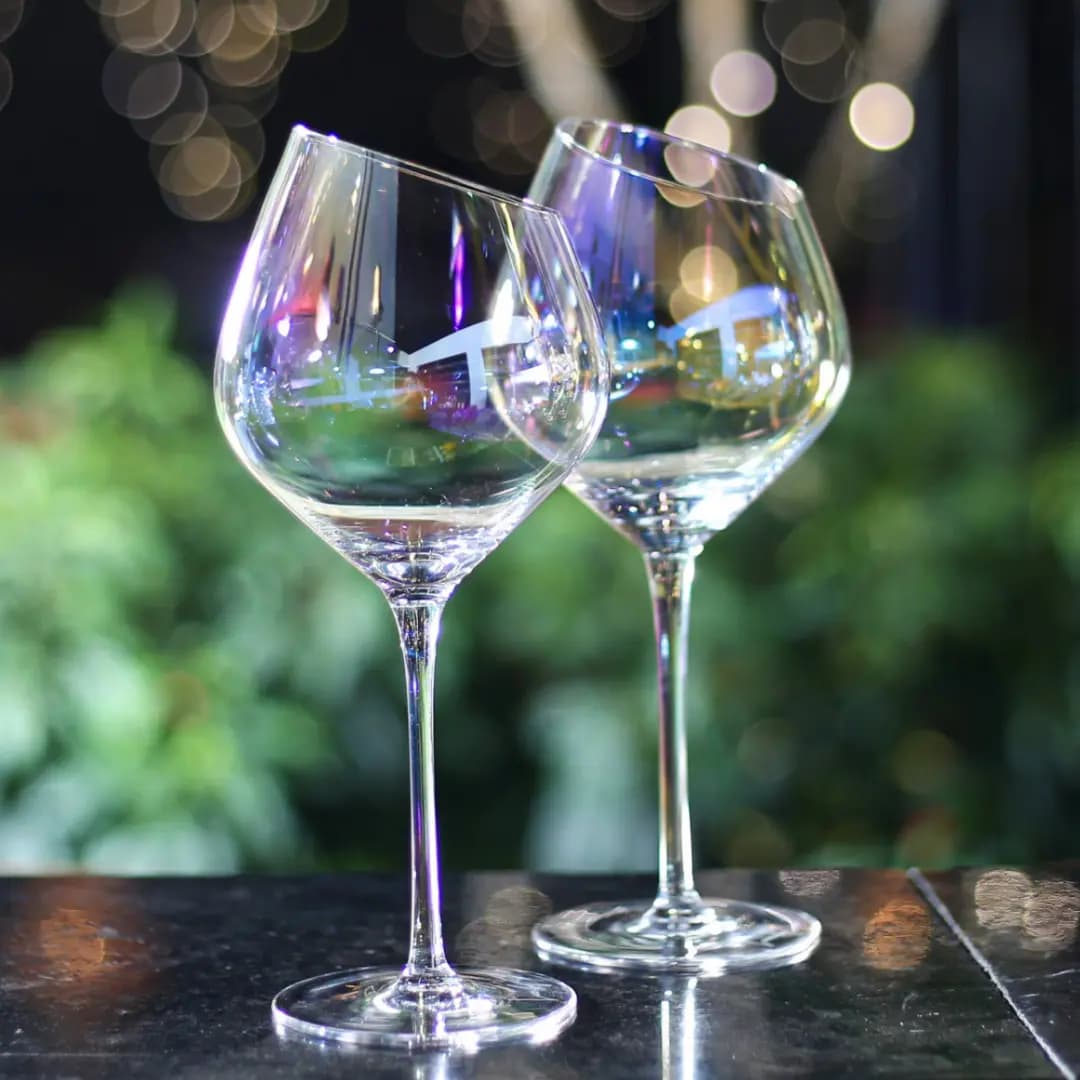
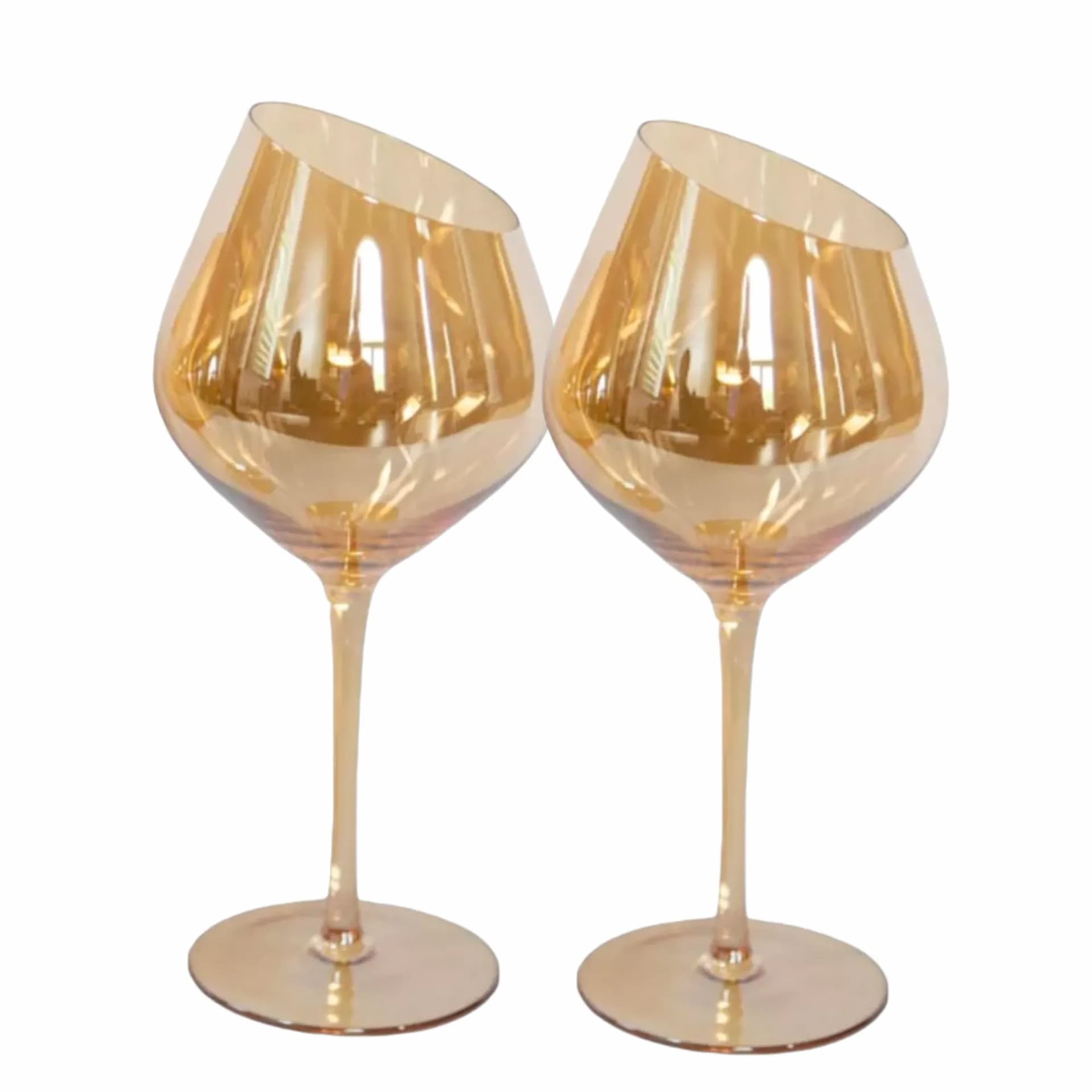
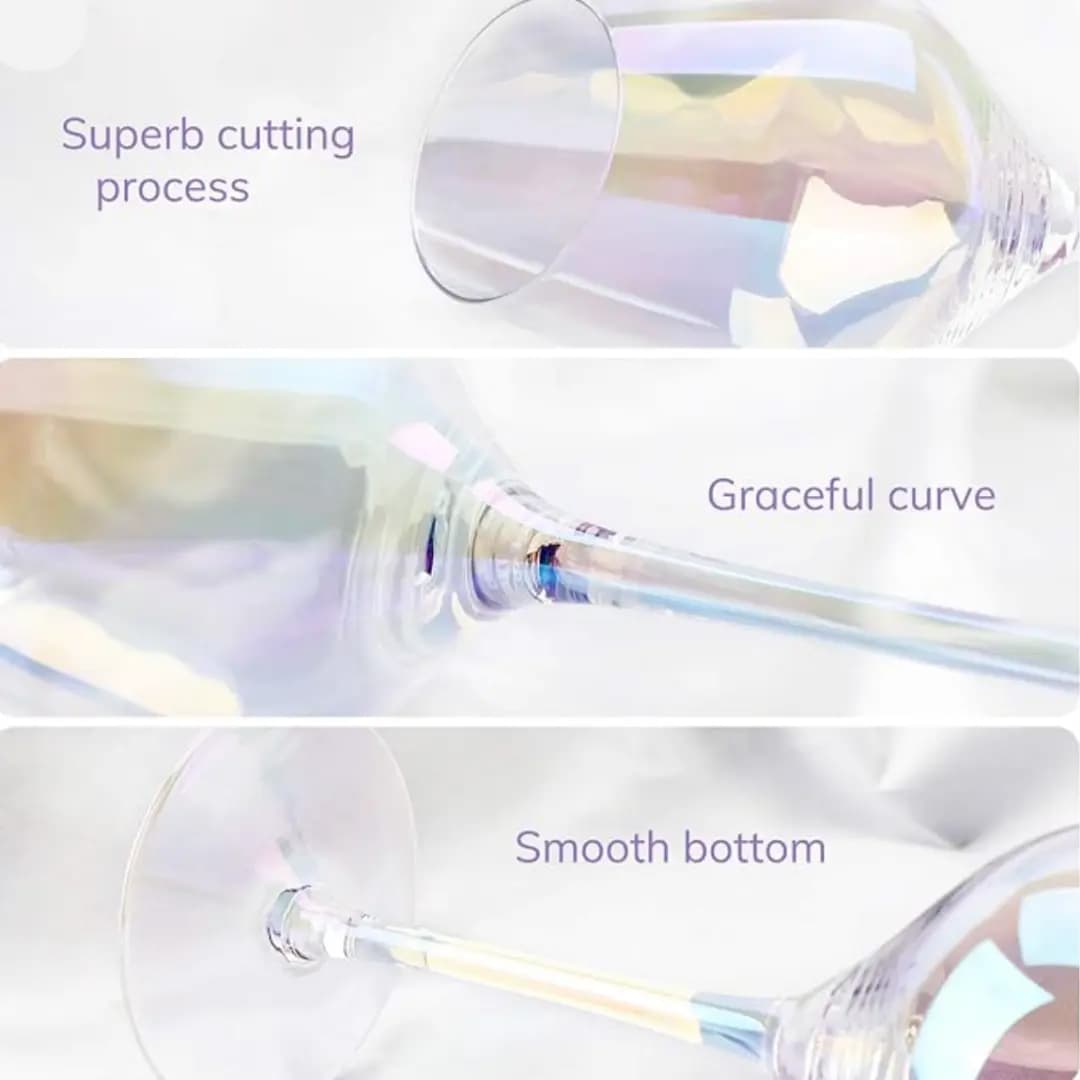
Our entire stemware line is hand-blown from lead-free crystal, with metallic oxides chosen for both optical clarity and absolute safety in long contact with wine. The signature slanted rim is laser cold-cut to a near-invisible 1mm edge, the iridescent and amber finishes are bonded by vacuum ion plating, and every glass is dishwasher safe — the modern formulation makes that promise possible without sacrificing the ringing tone or the brilliance.
If you have been drinking from soda-lime glass and want to feel the difference for yourself, the Iridescent Crystal Wine Glasses and the Amber Crystal Wine Glasses are designed to make the upgrade obvious from the first pour. Both are built to be passed down rather than replaced.